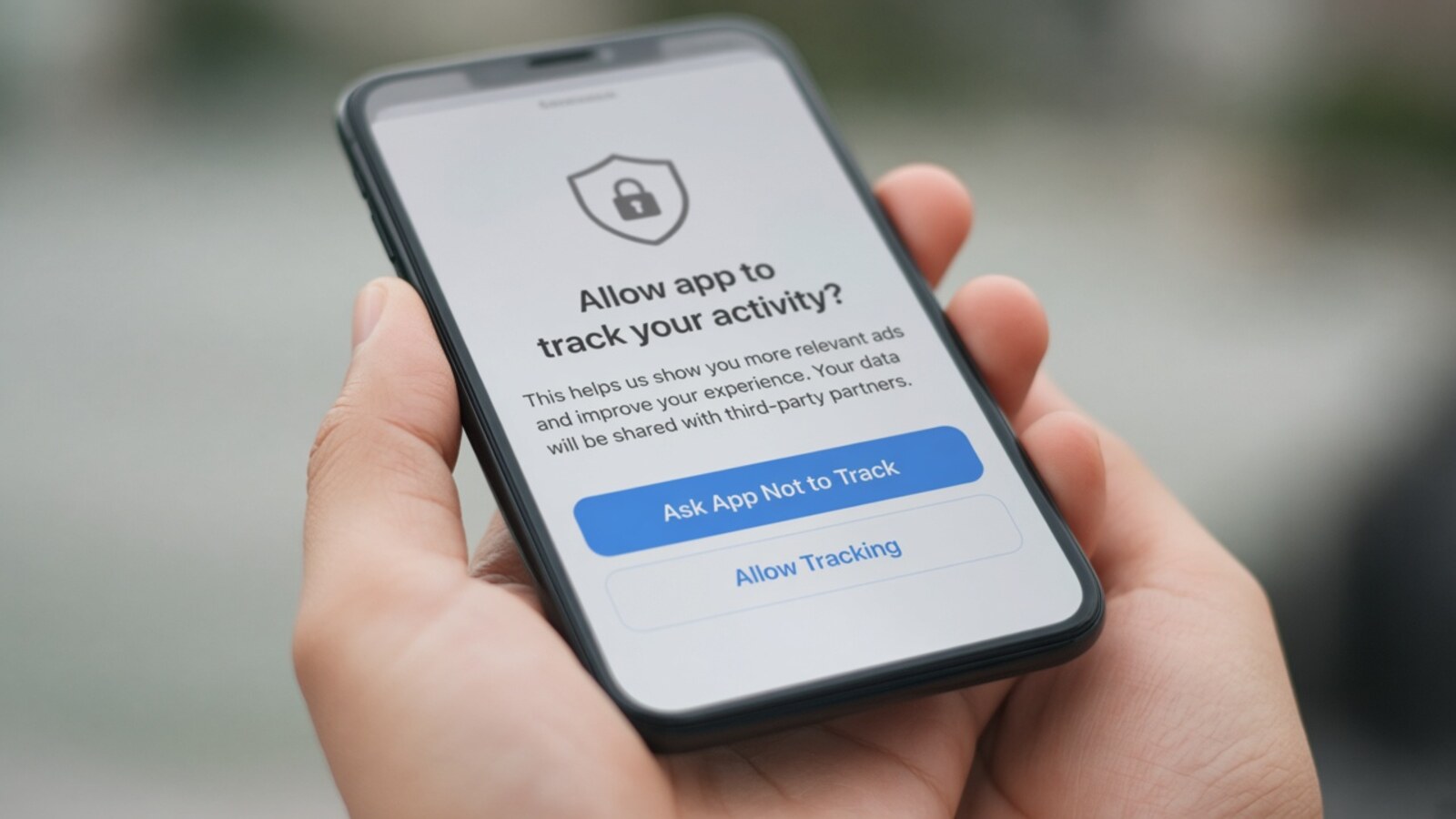
App Tracking Transparency, or ATT, is Apple's system that asks users whether an app may track them across other companies' apps and websites. That ask stays. What changes in parts of Europe is the look and language of the screen. Apple agreed to the changes after multi-year probes, including work by Germany's competition regulator.
Regulators had argued the old ATT design favoured Apple's own apps, which could use ecosystem data without facing the same scary consent screen third-party developers saw. The fix is a different prompt shape, not a free pass to track everyone quietly.
TL;DR: In the EU, apps can use a less alarming ATT consent screen: full page instead of a popup, no word "track," Allow and Reject buttons, clearer colours and formatting, plus a link for more info. Germany, France, Italy, Poland and Romania get the alternative prompt under local legal requirements. Developers may re-ask EU users one year after the last choice. You still have to consent.
Status note: Checked 27 September 2026. Details follow TechCrunch reporting dated 17 September 2026. Rollout timing inside each country can still vary; this article does not invent an App Store ship date beyond the reported agreement.
What the new screen looks like
The alternative screen is full-page, not a small popup. It removes the word "track." Buttons read Allow and Reject. Colours and formatting change, and there is a link for more information. The point of those edits is to make the choice feel less like a warning sticker and more like a normal permission ask, while still requiring a yes or no.
ATT itself remains. Soften any claim that Apple killed tracking prompts in Europe. The prompt changes shape. The need to ask does not go away.
Where it applies
TechCrunch reported the alternative prompt for apps in Germany, France, Italy, Poland and Romania because of legal requirements in those markets. That list is specific. Do not expand it to "every country on Earth" or invent extra member states not in the report.
Developers may re-prompt EU users one year after the previous choice. That matters for apps that lost a large share of tracking permission under the old design. A fresh ask after a year is not the same as ignoring the user's earlier answer tomorrow.
Why regulators pushed
Competition authorities said the old ATT favoured Apple apps that could use ecosystem data without the same consent screen rivals faced. If Apple's own products faced a softer path to data while third-party apps faced a harsher popup, that is a fairness problem, not only a privacy slogan fight. The agreed changes answer that complaint in the EU markets named above.
None of this invents a fine amount or a court judgment text. The brief's facts stop at the agreement to change screens after probes, including Germany's regulator.
What not to believe
Consent is not abolished. The false headline is any version that says Europe no longer requires tracking permission, or that Apple quietly turned tracking on for everyone. Users still see a choice. Buttons still include Reject. The story is design and wording under competition pressure, not the end of consent.
Who gains, and who should stay sceptical
Advertisers and app makers should care because permission rates can move when the screen feels less alarming. Privacy-focused readers should care for the opposite reason: softer copy can raise opt-in rates. Both can be true without inventing a percentage that is not in the brief.
The accurate middle is design under competition pressure. Regulators wanted a fairer prompt. Apple agreed to alternative screens in named EU markets. Users still choose Allow or Reject. Anything louder than that is marketing, not the TechCrunch record.
Sources: TechCrunch, 17 September 2026.