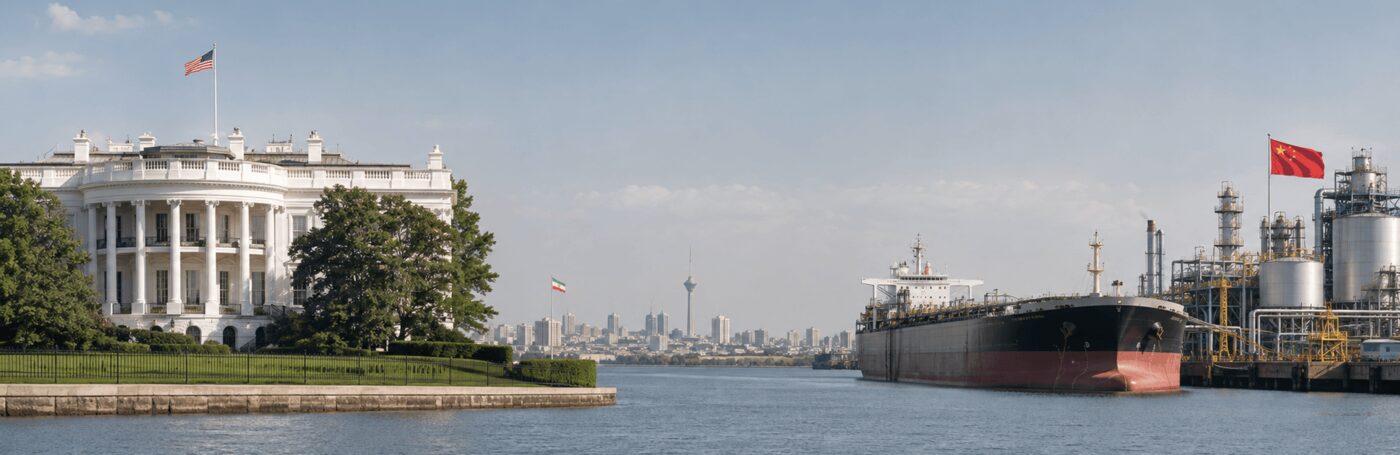
The United States is preparing a new set of Iran sanctions that Treasury Secretary Scott Bessent has called the "toughest sanctions in history". The part with the biggest consequences may not be what those measures do to Iran itself.
The real test may be what Washington is prepared to do to countries, banks, refineries and shipping networks that still deal with Tehran. China sits at the centre of that question.
President Donald Trump warned that countries offering Iran "any kind of lifeline" could face "huge economic consequences". He pointed not only at governments, but at financial institutions, companies, airports and other outfits that might help Iran move money, goods or oil.
That warning opens a much wider fight. China bought more than 80% of Iran's seaborne oil exports in 2025, according to Kpler data cited by Reuters. If the new measures hit large Chinese buyers or financial institutions, this is no longer a standard Iran sanctions story. It becomes a test of American financial power, Chinese energy demand and how oil markets hold up.
Status note: At publication, the U.S. Treasury had not issued the final list of measures or targets. Claims about specific Chinese banks, refineries or shipping companies remain possibilities, not confirmed parts of the package.
What has actually been announced?
Bessent said the details would be set out on Monday 24 August, U.S. time. His wording points to a wider maximum-pressure campaign already under way. "Toughest in history" is the administration's own label. It cannot be checked independently until the legal basis, designations, enforcement steps and exemptions are published.
What is confirmed is the intent to push beyond Iran alone.
Trump's warning was deliberately broad. It covered any country that lets its institutions or companies give Iran an economic lifeline. The examples included oil smuggling, cash transfers, money-exchange houses, ship registries and shell companies. Those are the usual channels governments try to squeeze when they want to cut a sanctioned country off from trade and finance.
The administration did not invent this approach. In April 2026, Bessent said buyers of Iranian oil, and banks holding Iranian funds, could face secondary sanctions. The Treasury has already targeted an independent Chinese refinery, plus dozens of firms and ships tied to Iranian oil trade and the shadow fleet.
The open question is how far the next package goes.
Will it add more small traders and tankers to an existing blacklist? Or will it go after larger foreign refineries, banks, insurers, ports and shipping networks, whose exclusion from the U.S. financial system would land much harder?
What are secondary sanctions?
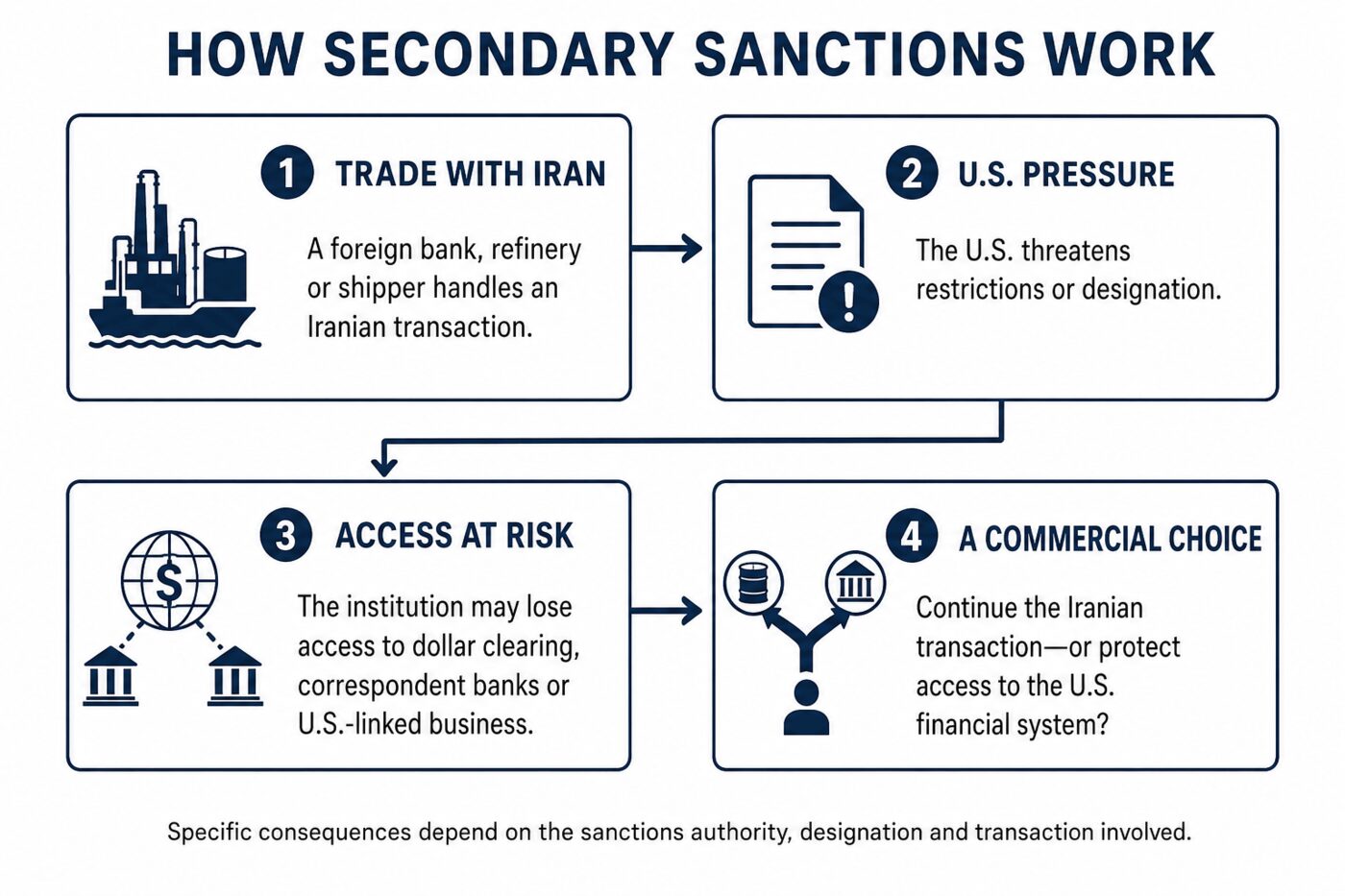
Primary U.S. sanctions usually restrict American citizens and companies in their dealings with designated people, firms or sectors. Secondary sanctions put pressure on non-U.S. entities by threatening consequences if they keep doing certain business with a sanctioned target.
The power comes from America's place in global finance.
A foreign bank does not have to be American to care about U.S. sanctions. It may still need dollar clearing, correspondent banking, U.S. investors, international insurers, or business that runs through U.S.-linked institutions. Washington can use that dependence as leverage.
Put simply, a targeted institution may be forced to choose:
Keep facilitating Iranian trade, or keep access to the U.S. financial system.
That does not mean Washington can stop every transaction. Trade can be rerouted through smaller banks, middlemen, other currencies, opaque ownership and ships in a shadow fleet. Iran has spent decades adapting. China has built trade and finance channels less exposed to direct U.S. control.
But evasion is rarely free. Sanctions can raise transaction fees, insurance costs, shipping risk and the discounts Iran has to accept on its oil. They can also make large international firms step back, leaving the trade to smaller outfits more willing to take the risk.
Why China is the central question
China was not named in Trump's warning. It is still the country most obviously exposed, because of the scale of its Iranian oil buying.
Kpler data cited by Reuters show China took more than 80% of Iran's seaborne oil exports in 2025. That does not mean Iranian crude supplied 80% of China's total oil demand. It means China took more than four-fifths of the oil Iran shipped by sea.
The distinction matters. Iran is important to some Chinese refineries and trading networks. China has a much wider energy supply. Its crude imports also come from Russia, Saudi Arabia, Iraq, Brazil and the United Arab Emirates.
Washington has leverage. Beijing has options too.
China could cut purchases, shift some business through firms less exposed internationally, demand deeper discounts from Iran, or reject the U.S. campaign outright. The choice would depend on the exact sanctions, who is targeted, the price and availability of other oil, and how far Beijing is willing to take economic cost in a political fight with Washington.
Bessent has publicly urged China to cooperate and argued that Beijing has an interest in stable Gulf energy flows. China has rejected unilateral sanctions as a solution and kept calling for diplomacy.
That leaves a hard balance. Measures too weak to confront China may fail to cut Iran's oil income by much. Measures strong enough to threaten large Chinese banks or refineries could escalate an already tense relationship and disrupt energy trade.
Could America really cut off a large Chinese bank?
In law and on paper, the United States has strong tools. It can freeze assets under its jurisdiction, ban U.S. dealings with designated entities, restrict correspondent banking and penalise parties that help forbidden transactions.
Using those tools on a small refinery or shipping firm is very different from using them on a systemically important Chinese bank.
Designating a large bank could jolt trade finance and world markets. It could also trigger retaliation against U.S. firms in China, speed up efforts to work around the dollar, and unsettle U.S. allies worried about collateral damage.
That is why the identity and scale of the targets matter more than the administration's headline wording.
A long list of small entities can create enforcement pressure without really changing the market. A direct move against a large bank, refinery, insurer or port network would be a more serious step. Until Treasury publishes the package, it is wrong to assume which path Washington has chosen.
Iran's warning raises the stakes
Iran has dismissed the coming measures and warned countries against helping the U.S. campaign. Iranian officials have suggested cooperation could be treated as a hostile act and have talked about retaliation.
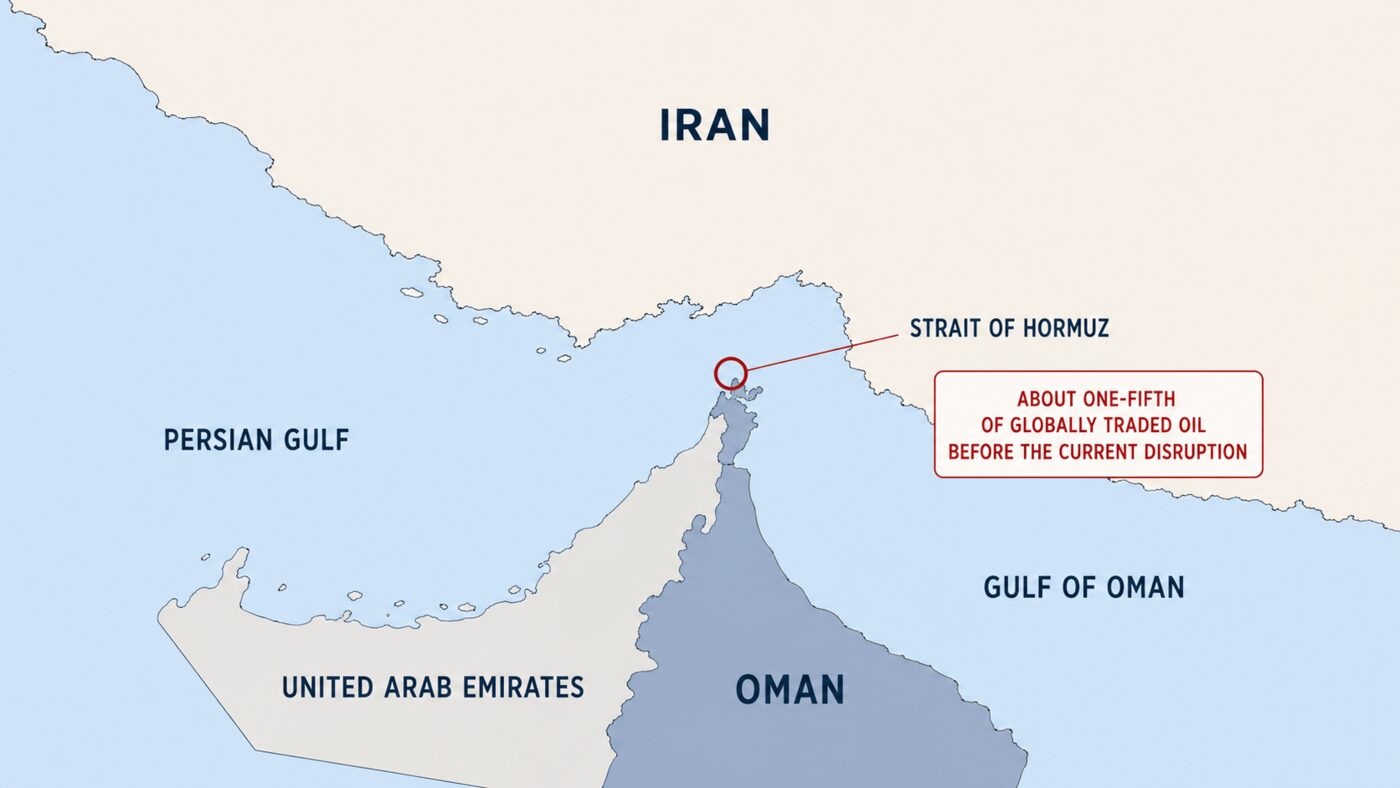
Those statements matter because the economic fight is running alongside a serious disruption in the Strait of Hormuz.
Before the current conflict, the strait carried about a fifth of the world's traded oil. Reuters reports that oil traffic on that route is now almost at a standstill. That disruption, not the sanctions announcement alone, already exposes global energy markets to a supply risk.
Iran's ability to threaten shipping gives it leverage. Using it also carries huge risks. Further disruption could hurt Gulf economies, raise costs for Iran's trading partners, push oil prices up and bring more international pressure.
Countries asked to back Washington are therefore weighing more than access to Iranian trade. They also have to think about economic or security retaliation, and about a longer regional confrontation.
What would this mean for oil prices?
Sanctions do not produce one automatic result for oil prices.
If the package cuts Iranian exports by a lot while Hormuz traffic stays tight, the supply outlook could tighten further. Buyers would compete for other barrels. Transport and insurance costs could rise. The risk premium in oil prices could increase.
If the measures mostly write down restrictions traders already expected, the first market reaction may be smaller. Prices could even fall for a time if the announcement is milder than feared, or if investors had already priced a harder case.
Enforcement will decide more than the press conference. Sanctions that exist on paper but are regularly dodged will do less than measures backed by real pressure on banks, insurers, ports and ship operators.
China's response will matter just as much. A real cut in Chinese buying would weaken Iran's main seaborne oil outlet. Continued buying, especially through institutions Washington will not or cannot penalise, would show the limits of the campaign.
The real test comes after the announcement
Headlines will ask whether these are really the toughest sanctions ever put on Iran. That may not be the most useful question.
The better questions are:
Which entities and sectors are actually targeted?
Are large foreign banks, refineries, insurers or shipping networks included?
What exemptions, transition periods or licences are built in?
How hard will Washington enforce secondary sanctions?
Will China cut Iranian oil purchases, or push back?
How will Iran respond if other countries cooperate?
America can make trade with Iran costlier and riskier. Its financial system is still extraordinary leverage. But China's scale, its alternative trade channels and its strategic rivalry with Washington make this much harder than adding names to a blacklist.
If Beijing refuses to stop buying Iranian oil, Washington will have to choose: escalate against large Chinese institutions, live with continued trade, or negotiate a narrower result.
That is why the next sanctions package may not be judged by how many Iranian names go on a list. It may be judged by what the United States is prepared to do when the biggest buyer of Iranian oil says no.