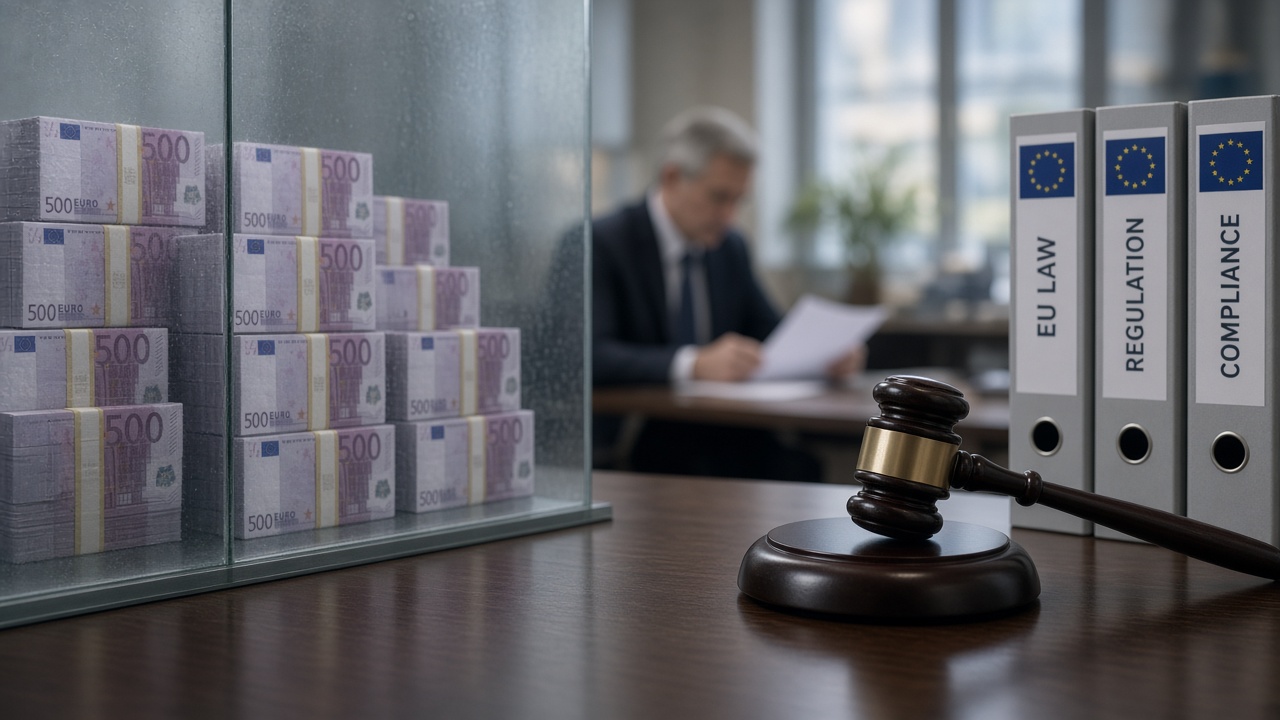
Euroclear held about €202 billion in sanctioned Russian assets at the end of June 2026. EU governments used windfall proceeds and a December 2025 loan design to support Ukraine, while Russia sued in its own courts and at the EU General Court. Belgium faces treaty notices. Readers who think the money was already seized and spent are reading the wrong story.
TL;DR: About €202bn in Russian assets sat frozen at Euroclear mid-2026. The EU took a €90bn budget loan path and keeps reparations-loan work alive. Russia won huge domestic awards against Euroclear that Brussels does not recognise. Freezing is not the same as taking title. Watch Belgian, EU and Russian dockets.
Status note: Figures checked to Euroclear's mid-2026 stock and Modern Diplomacy's 29 September 2026 legal roundup. Belgium's Council of State issued a procedural ruling on 11 September; Russia filed at the EU General Court on 15 September. No EU-wide confiscation order is on the books as of this brief.
What is frozen, and what the EU already did
Euroclear, the Brussels-based securities depository, reported roughly €202 billion in sanctioned Russian assets at end-June 2026. That stock is immobilised under sanctions. Immobilised does not mean the EU has transferred legal title to Kyiv or to EU treasuries.
In December 2025, EU leaders agreed a €90 billion EU-budget loan for 2026-27 to support Ukraine. Work on a reparations loan backed by the frozen stock continues; it has not been abandoned. Separately, windfall profits from the immobilised assets, about €6.6 billion by the first half of 2026, have already been paid over to the EU. Windfall cash and principal ownership are different legal animals. Mixing them in headlines creates the false sense that the €200 billion itself was confiscated.
The court tracks that are still moving
Russia's Arbitration Court handed down an award of about 18.2 trillion rubles against Euroclear in May. A July appeal was rejected in the Russian system. Euroclear says the award is not recognised under EU law. That is a collision of legal systems, not a quiet settlement.
Belgium's Council of State issued a procedural ruling on 11 September 2026. It did not order a release of the assets. Russia filed a case at the EU General Court on 15 September. Nine notices of dispute have also been lodged against Belgium under bilateral investment treaties in the Belgium-Luxembourg Economic Union network. Those tracks can move on different clocks. None of them, so far, has produced an EU order that simply hands the €200 billion to Ukraine as confiscated property.
What not to believe
The false headline is that the legal fight is over, or that freezing already equals seizure. It does not. Sanctions stop Russia from using the assets. They do not, by themselves, rewrite ownership. The EU is trying to finance Ukraine without crossing into a confiscation that courts and partners would treat as unlawful expropriation. Russia is trying to force recognition of huge domestic judgments and to challenge EU measures in European courts.
For markets and for Ukraine funding debates, the practical takeaway is narrower. The €202 billion stock is still the backdrop. Windfall transfers and the €90 billion loan are the cash tools already in motion. The reparations-loan design remains political work in progress. Anyone selling "EU already seized €200bn" as settled fact is ahead of the law.
Sources: Modern Diplomacy, The €200bn legal war nobody thinks is still live; Euroclear H1 2026 disclosures on sanctioned Russian asset stock and windfall remittances.