TL;DR: ABC reported on 5 October that Cotality's preliminary clearance hit 48.2 percent, just above the late-June trough of 47.4 percent. Auction volumes fell 12.8 percent week on week and 47.5 percent year on year across the capitals. CoreLogic's Tim Lawless blamed long weekends plus the Reserve Bank's fourth rate hike this year, which took the cash rate to 4.60 percent in September. SQM Research counted 276,000 unsold homes, up 21.6 percent year on year, with distressed sales at 4,872 in September, up 29 percent. These are auction and listings metrics, not official Australian Bureau of Statistics house price indexes.
Status note: Checked 5 October 2026 against ABC News reporting by Alex Turner-Cohen citing Cotality, CoreLogic, SQM Research, and Louis Christopher. Final clearance figures can revise up slightly as late results arrive. Policy changes in the May budget continue to ripple through seller math.
Why clearance rates matter in Australia
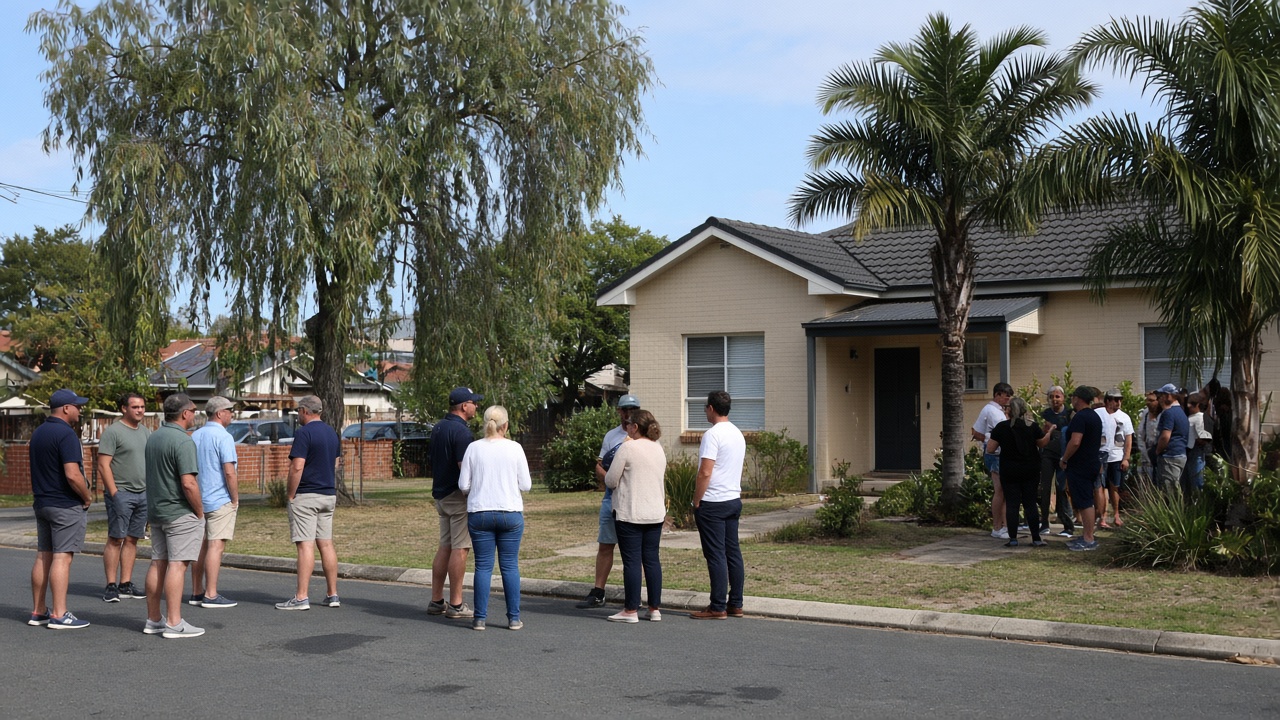
Unlike markets where almost every sale runs through a listing agent, Australia's big cities still use Saturday auctions as a temperature check on buyer demand. A clearance rate measures the share of scheduled auctions that sell on the day or immediately after. When it drops under 50 percent, economists read hesitation: fewer bidders, more passed-in properties, and vendors resetting expectations.
Cotality's preliminary 48.2 percent for the week ending 5 October 2026 fits that story. It is the lowest since the 47.4 percent late-June print and the second lowest preliminary reading in 2026 so far, according to ABC's summary. Preliminary numbers can tick up when agents report delayed sales, but the direction still signals a cooler spring than sellers hoped.
Volumes fell in Sydney and bounced in Melbourne
Only 1,223 capital-city auctions ran last week, down 12.8 percent from the prior week and 47.5 percent from the same week a year earlier. Sydney scheduled 304 auctions, a 61 percent weekly drop and 38.5 percent below the year-ago week, a sharp pullback in the country's priciest market. Melbourne held 670 auctions, up 136 percent versus the quiet AFL grand final weekend but still 45.6 percent below the same week in 2025.
That split matters for headlines. A Melbourne rebound from a sports weekend is not the same as national strength. Sydney's thinner calendar often means fewer forced sales clearing, which can hold prices sticky even as clearance weakens.
Rates, holidays, and the May budget
CoreLogic research director Tim Lawless pointed ABC to two brakes on demand: long weekends that pull buyers out of the market and the Reserve Bank of Australia's fourth increase this year, which lifted the cash rate to 4.60 percent in September. Higher borrowing costs bite monthly payments faster than asking prices adjust downward.
Federal budget changes also sit in sellers' spreadsheets. Restrictions on negative gearing for new purchases and a higher capital gains tax rate on many investment properties push some landlords to sell now rather than hold through a softer rental yield. Those policies do not show up in a single auction week's clearance print, but they explain why listing counts are rising even as bids thin.
Listings, stale stock, and distressed sales
SQM Research estimated 276,000 unsold homes on market nationally, up 21.6 percent year on year, with 10.5 percent more listings sitting unsold beyond 180 days. Louis Christopher of SQM told ABC that Sydney faces a demand problem more than a supply shock, language that matches weak clearance despite still-tight inner-suburb narratives.
Listing growth is broad. Brisbane listings rose 43.5 percent year on year, Adelaide 39.5 percent, Melbourne 30.3 percent, Perth 21.3 percent, and Canberra 17.8 percent. Distressed sales numbered 4,872 in September, up 29 percent from a year earlier, a subset of owners who cannot service debt or need to exit quickly. Some economists quoted in the coverage still expect peak-to-trough price falls around 10 to 15 percent in parts of the market, a forecast band, not a uniform national drop.
Where things stand
Spring 2026 opened with fewer auctions, weaker clearance, and more homes sitting unsold. That pattern fits higher rates and tax policy uncertainty more than a vendor frenzy. Social clips declaring a crash or a hidden boom from one week's Cotality print skip the distinction between auction sentiment and official ABS price series, which lag and smooth the cycle.
Watch final clearance revisions, October auction volumes after the holiday stretch, and whether distressed sales accelerate into year end. For now, 48.2 percent preliminary clearance is a clear signal that many sellers are not getting the crowd they wanted on the street.