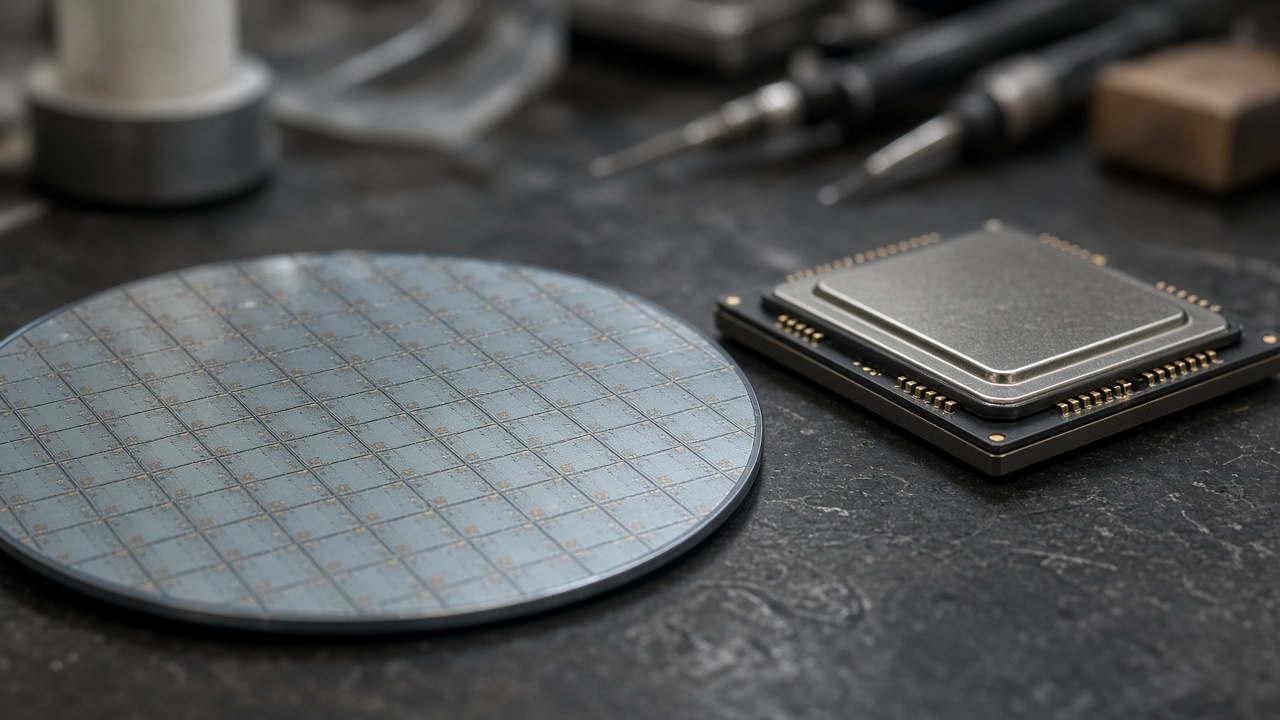
TL;DR: Jalapeño is OpenAI's inference ASIC co-designed with Broadcom, shown at Hot Chips 2026. Ho said in-house models including Codex, Sol, and Astra sped layout and verification work starting around November 2025, cutting concept-to-reveal to under two years versus an old 18-month-to-two-year baseline even with existing IP. Human teams still pass Synopsys and Cadence timing and signal-integrity checks before tape-out. It is not a 2026 mass-market replacement for Nvidia's entire fleet.
Status note: Checked 5 October 2026 against Jake Roach's Tom's Hardware interview with Richard Ho published 30 September 2026 and follow-on industry Q&A cited in the same beat around 4 October. Performance stepping details and gen2/gen3 timelines come from that reporting and can shift as silicon matures.
What Jalapeño is on stage
Custom application-specific integrated circuits, ASICs, let hyperscalers tailor inference silicon to their own models instead of buying only off-the-shelf graphics processors. OpenAI's Jalapeño is an inference-focused ASIC developed with Broadcom. It appeared at Hot Chips 2026, the annual conference where vendors show architecture choices before products hit general clouds.
Ho described the program to Tom's Hardware as AI-assisted hardware design done with OpenAI's own model stack. Work started around November 2025. Kernel bring-up landed around May 2026 when first silicon came online. From RTL, the register-transfer level description of the chip, to tape-out took about nine months. From concept to public reveal stayed under two years, compared with an internal old baseline of 18 months to two years even when reusing existing intellectual property blocks.
How the models helped and where humans still rule
Ho pushed back on the idea that models replaced engineers. He said a smaller, highly skilled team moved faster because models handled repetitive design and verification tasks. The models named in the interview include Codex, Sol, and the newer Astra family used as the workflow evolved.
Sign-off did not get skipped. Ho told Tom's Hardware that even if a model were 99.99 percent correct on a block, you still cannot tape out without running standard electronic design automation flows from vendors such as Synopsys and Cadence: static timing analysis, signal integrity, the checks fabs demand before they accept a mask set. AI shrinks iteration time; it does not waive physics.
On silicon revisions, reporting around the interview said the B0 stepping delivered up to 25 percent better performance per watt than the A0 stepping. That is a lab and architecture story, not a claim that every OpenAI rack already runs Jalapeño at scale.
Roadmap limits Ho acknowledged
Hardware leadership churn matters for context. Clive Chan, who had been part of OpenAI's hardware push, left for Anthropic in June 2026 according to the same reporting beat. Ho said a second generation is approaching tape-out and a third generation is in development, but he doubted OpenAI could repeat nine-month cycles back to back because underlying tools and process readiness will not always keep pace.
He also said the first architecture deliberately avoided exotic packaging such as three-dimensional stacking and co-packaged optics, choices that trade complexity for later performance gains. That framing matters for readers comparing Jalapeño headlines to Nvidia's full data-center roadmap: OpenAI is building inference silicon for its own stack, not announcing a finished substitute for every GPU in the market this year.
Where things stand
OpenAI used its own AI to compress Jalapeño's design calendar with Broadcom as partner, showed the chip at Hot Chips, and still routes final approval through the same EDA sign-off every serious vendor uses. Gen2 and gen3 are in flight; Ho is cautious about repeating the fastest cycle every time.
Social posts that treat Jalapeño as proof OpenAI already outsources zero Nvidia silicon, or that invent unsourced memory and power specs not in Tom's Hardware's reporting, overshoot the evidence. Watch for production deployment details, stepping gains in real workloads, and whether the next tape-outs hit Ho's implied schedules. The interview is a design-process story, not a shipped-everywhere 2026 product launch.
Sources: Tom's Hardware interview with Richard Ho on Jalapeño, 30 September 2026.