TL;DR: Germany's chancellor is in Kyiv with a roughly €1 billion military package, drones and missiles included, and €350 million to harden the grid before winter. The trip is support, not EU accession. Merz is still selling associated membership without votes. Zelenskyy has already said no to that. Sirens during the visit do not make it a secret NATO deployment.
Status note: Checked 4 October 2026 against POLITICO Europe's dispatch from Kyiv the same morning. Package figures come from a German official as reported there; they are pledges until delivery schedules and Bundestag follow-through are public. EU accession remains a 27-member decision, not a bilateral handshake.
The visit under fire
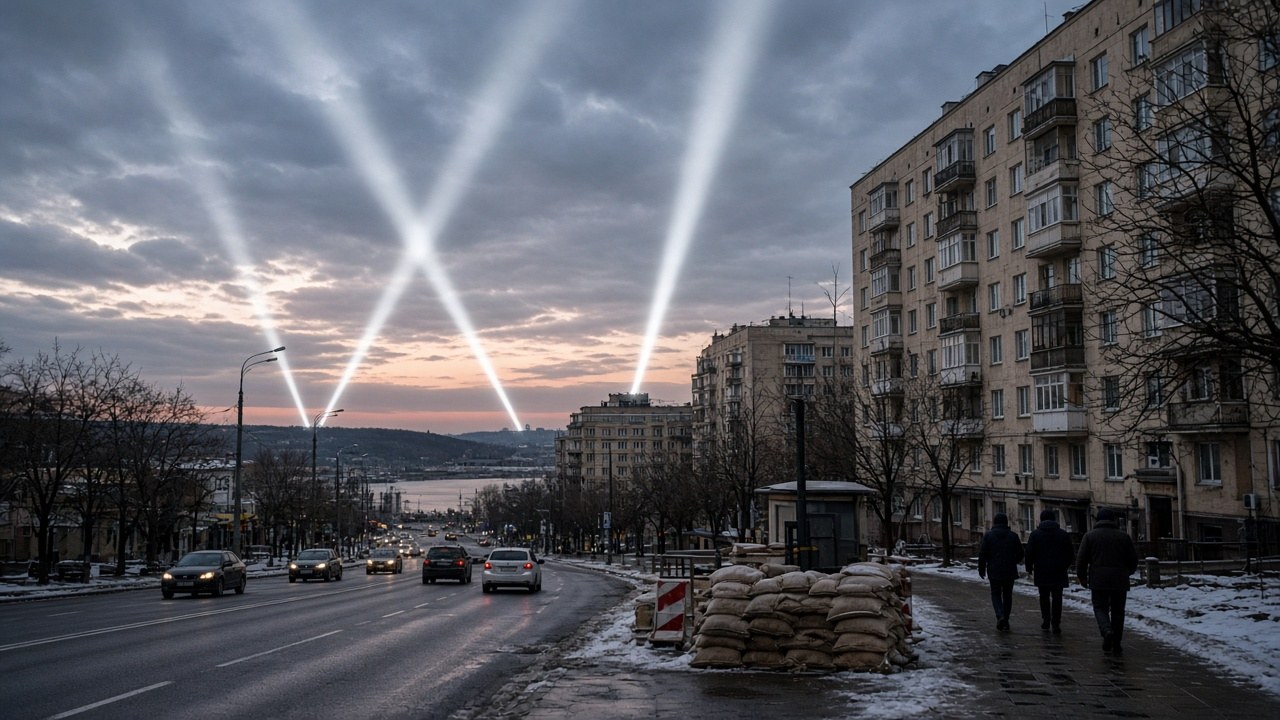
Merz arrived Sunday 4 October 2026 on his first bilateral trip to Kyiv and his second as chancellor, after a May 2025 visit with leaders from France, the United Kingdom and Poland. Unlike some earlier Western stopovers, when Moscow had largely held back from striking the capital, sirens sounded during this one. Mayor Vitali Klitschko said Russia had hit the roadway of the North Bridge. On Saturday, Russia's foreign ministry warned foreign visitors and diplomats to leave Kyiv.
On arrival Merz said: "If we fail to stop Moscow, sooner or later the Russian war machine will turn against us." He added that he would tell Zelenskyy, "You can continue to count on our help." Days earlier in Münster he had called the coming fifth winter of the war likely "the hardest one yet."
What Berlin says it is bringing
A German official told POLITICO that Berlin will provide a new military support package worth about €1 billion, including missiles and drones and satellite technology to help strike military targets in Russia. Germany will also fund mass production of interceptors against high-speed jet drones, and send generators, substations and repair kits worth €350 million to keep the grid standing through winter attacks on power and heat.
Kyiv warned this week it is running out of money to buy weapons, pointing to a €24 billion defence funding gap. The European Union answered by accelerating a €45 billion loan. Germany is already the largest European contributor of financial and military support.
Last month Defence Minister Boris Pistorius said Germany would transfer Patriot PAC-2 interceptors from its own stocks and asked others to follow. After an attempted drone attack on a Ukrainian cargo plane in Leipzig in August, which Germany blamed on Russia, Berlin said its intelligence services would help with targeting data for long-range strikes on Russia's military and industrial base. Merz still refuses to send Taurus cruise missiles, a reversal of his demand in opposition. His government has instead funded Ukraine's own long-range work. On Thursday Zelenskyy announced a successful test of the FP-7 ballistic tactical missile.
The EU argument that did not go away
Merz doubts Ukraine can join the EU in the coming years. He has proposed associated membership: single-market access and observer seats in the Council, Commission and Parliament, without votes. Zelenskyy has rejected that, insisting on "full and equal" membership. A Sunday bilateral does not settle an enlargement file that needs every capital.
Economy Minister Katherina Reiche travelled with Merz, along with people from about a dozen German energy, chemical and drone firms, for a German-Ukrainian economic forum in Kyiv the same day. A Wednesday call between Merz and Zelenskyy focused on getting more Patriot missiles from allies including Japan, and ammunition for F-16s used against jet drones.
Foreign Minister Johann Wadephul, after meeting Sergei Lavrov in New York last weekend, welcomed a US invite for Vladimir Putin to the G20 in Miami in December as a possible opening for talks. On Friday he said Russia's leadership still shows "no real interest" in ending what he called fantasies of subjugation and intends to continue the war.
Where things stand
Sunday's story is hardware, money and a winter grid, plus an unresolved membership fight. It is not Ukraine joining the EU this month, and it is not Germany putting Taurus on Ukrainian rails. Watch deliveries against the €1 billion and €350 million lines, and whether associated membership stays Merz's public offer.