TL;DR: Trump told an Ohio rally that overseas companies get a short window to build factories in America or face tariffs of 150, 200, 250 or even 300 percent. He has not published an order that puts those rates into force. South Korea is already under pressure over how to spend a $350 billion US investment pledge, including a disputed Alaska gas project. Listen for paper from the White House, not gymnasium numbers.
Status note: Checked 4 October 2026 against Korea Herald reporting of the 3 October Vandalia remarks (Reuters-Yonhap photo and dispatch), Fox News and local Associated Press coverage of the same rally, and Korea Herald's account of the $350 billion package and Alaska LNG dispute. Rally language can harden into a proclamation, stall, or stay as talk. Seoul's position on Alaska LNG can still move.
What he actually said in Ohio
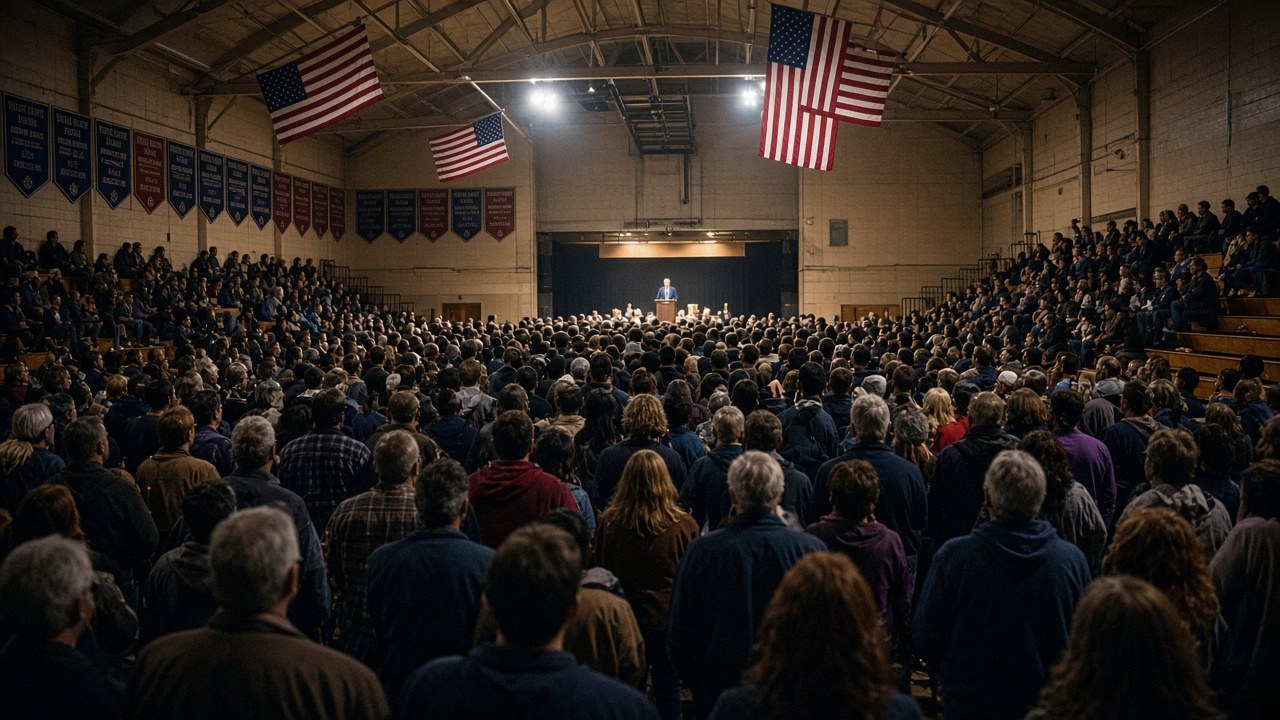
Trump spoke on Saturday 3 October 2026 at Butler High School in Vandalia, outside Dayton, campaigning for Republican Senator Jon Husted and gubernatorial candidate Vivek Ramaswamy ahead of the 3 November midterms. He tied Ohio factory announcements to tariffs and told the crowd, in the wording carried by Yonhap and Korea Herald, that the United States gives companies "a small window of about a year and a half to build their factories here" and that if they do not, Washington will impose tariffs of 150, 200, 250, or even 300 percent.
He named South Korea with China, Japan and Canada as countries whose firms, in his telling, have been pushed toward US plants by tariff policy. Fox News' account of the same night dwelt more on Ohio investments than on the 300 percent line. Local AP coverage quoted him calling tariff "my favorite word" and citing construction of factories and plants.
That is the record of a rally. It is not a Federal Register notice.
How we got to factory-or-tariff politics
Since returning to office, Trump has used tariffs as both an industrial lure and a bargaining chip. Courts have already clipped one legal path: in February 2026 the Supreme Court held that the International Emergency Economic Powers Act does not authorize presidential tariffs, leaving Congress's tariff power and other statutes at the centre of any new levy. A rally number still has to find a lawful hook if it is to bite at the border.
Ohio is useful scenery for that argument. Fox News reported Trump pointing to a $400 million Stellantis investment in Toledo, an $850 million Electra aerospace project near Springfield, and Bayer's plans for a $2.2 billion pharmaceutical campus near Columbus that the company says would support about 600 permanent jobs and 1,500 construction jobs. Those are company and campaign figures. They do not, by themselves, write a 300 percent duty into the tariff schedule.
The Korea file sitting next to the threat
Korea Herald reported that South Korea last year agreed to invest $350 billion in the United States in return for lowering tariffs on Korean goods from 25 percent to 15 percent, with $150 billion of that described as shipbuilding cooperation. Trump this week presented Korean participation in the Alaska liquefied natural gas project as part of that strategic package. Seoul says it has agreed only to begin reviewing the project and has not treated participation as settled.
On Friday, Trump rejected the idea that he had jumped the gun on Korean involvement. "I didn't jump the gun. I mean, they were there and they were represented," he said, according to Korea Herald. President Lee Jae Myung said in September that commercial viability, including how returns and losses would be shared, had become a sticking point, and that Seoul had pushed for the words "commercially reasonable" in the investment agreement. Industry Minister Kim Jung-kwan has said Korea should not put money into projects that fail commercial tests, while warning that walking away from agreed work could carry its own costs.
Lead developer Glenfarne Group estimates Alaska LNG at $44.5 billion to $54.5 billion, Korea Herald reported, citing Reuters on cost. The plan includes an 800-mile (1,287-kilometre) pipeline from the North Slope to Nikiski plus treatment and liquefaction plant. The first confirmed project under the wider US investment package, the same report said, is a gas-fired power plant in Encinal, Texas. Nuclear reactors have been discussed; they are not a finished build list.
Where things stand
Foreign companies have not been told, by a published US order dated this weekend, that a 150 to 300 percent tariff clock started on Saturday. What exists is a presidential threat on the campaign trail, aimed at midterm voters in a manufacturing state, plus an unresolved argument with Seoul about whether Alaska LNG sits inside a $350 billion bargain that already swapped tariff relief for promised investment.
If a later proclamation or statute names rates, dates and product lines, that will be the binding step. Until then, 300 percent is a number in a gym, not a duty at the dock.
Sources: Korea Herald on the Ohio tariff remarks and Korea investment dispute, 4 October 2026; Fox News on the Vandalia rally, 3 October 2026; Journal-News / AP coverage of the same rally; Supreme Court, Learning Resources v. Trump, February 2026, on IEEPA and tariffs.