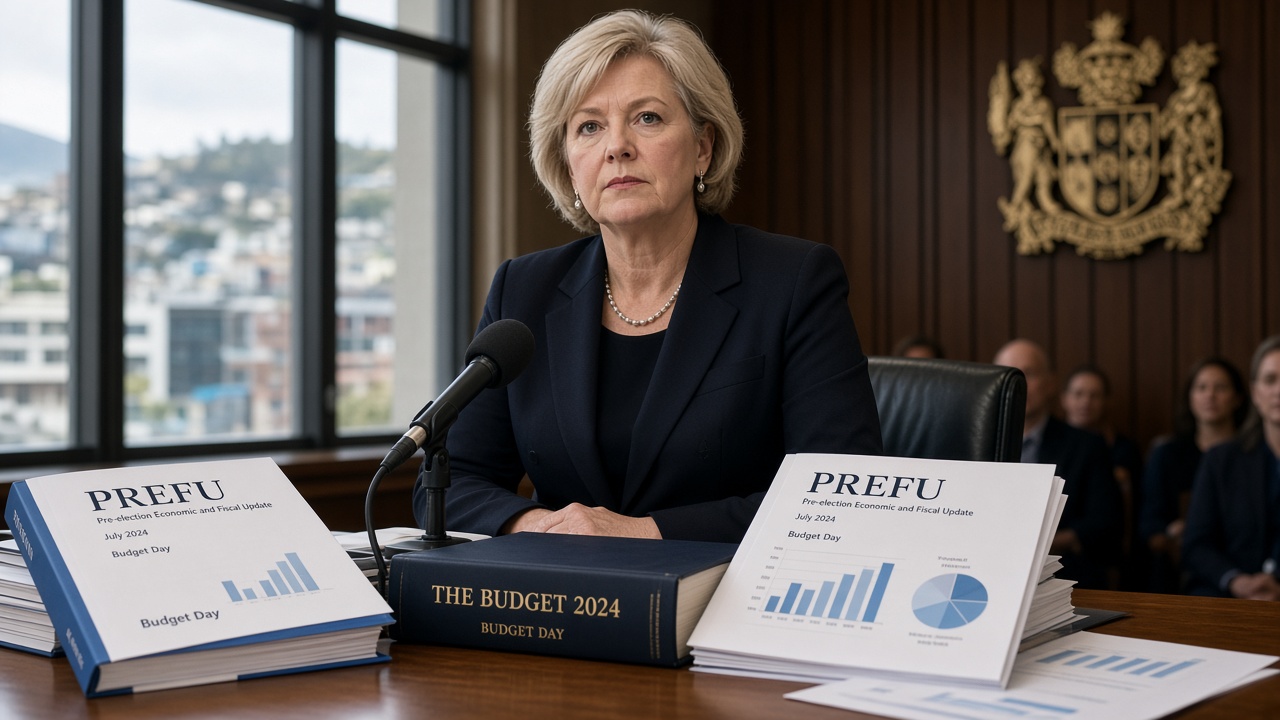
Treasury now puts the 2028/29 surplus at $4 billion, up from $2.6 billion in the May Budget. House-price growth next year is cut to 0.6% from 4%. Risks still tilt toward weaker growth and higher inflation. Read the books as a mixed brief: fiscal charts improve, the economy still looks shock-prone.
TL;DR: PREFU on 29 September shows a delayed recovery and a larger forecast surplus in 2028/29 ($4b vs $2.6b). Willis keeps mid-2029 as the surplus date after fuel-tax delays cost hundreds of millions. A high-oil scenario would cost about $17b over five years. Do not treat the surplus as already in the bank.
Status note: Checked 29 September 2026 against Newsroom's PREFU report and Willis remarks. Election campaigns can change spending plans. Oil and bond-rate paths can rewrite the tables.
Better books, slower recovery
Treasury's first line is blunt: an emerging recovery has been delayed by higher oil prices. Unemployment peaked a touch higher than May expected. National house prices are no longer forecast to jump 4% next year; 0.6% growth would still be the first national lift in several years.
On the Crown ledger, spending restraint and tax revenue pull the surplus path forward. The structural deficit has shrunk sharply from 2023/24 levels. Willis says lower future borrowing needs cut financing costs by $880 million over three years. She also warns the Prefu is not a licence for a big spend-up.
Why the surplus date did not move earlier
Forecasts show a small deficit in 2027/28, about $834 million, which on paper could tempt an earlier surplus target. Willis points to the decision to delay fuel-tax rises: $275 million this year and $649 million next, enough to close that gap. She says she will not count on future upward revisions.
That political choice matters for voters. Cheaper fuel near an election has a fiscal price. The surplus pledge stays mid-2029 unless later updates rewrite the arithmetic.
The risk list that still looms
Treasury Secretary Iain Rennie describes a more shock-prone world: disasters, geopolitics, market disruptions. If oil stays high instead of easing with futures, the five-year hit is about $17 billion, with GDP 1.5% below baseline. Rising sovereign bond rates push private and Crown financing costs higher.
New fiscal risks include a $10 billion to $15 billion Defence Capability Plan bill over coming decades. Another security-linked risk is redacted. Public-service AI productivity bets also carry upside and downside that are not fully costed. Households and markets should hold the nicer surplus path and the oil/defence caveats together.
Sources: Newsroom, Recovery slows in pre-election forecasts.