Australia’s annual inflation rate fell in July - so why did markets suddenly become more worried about another RBA rate hike? Because the 3.5% annual inflation figure only tells part of the story.
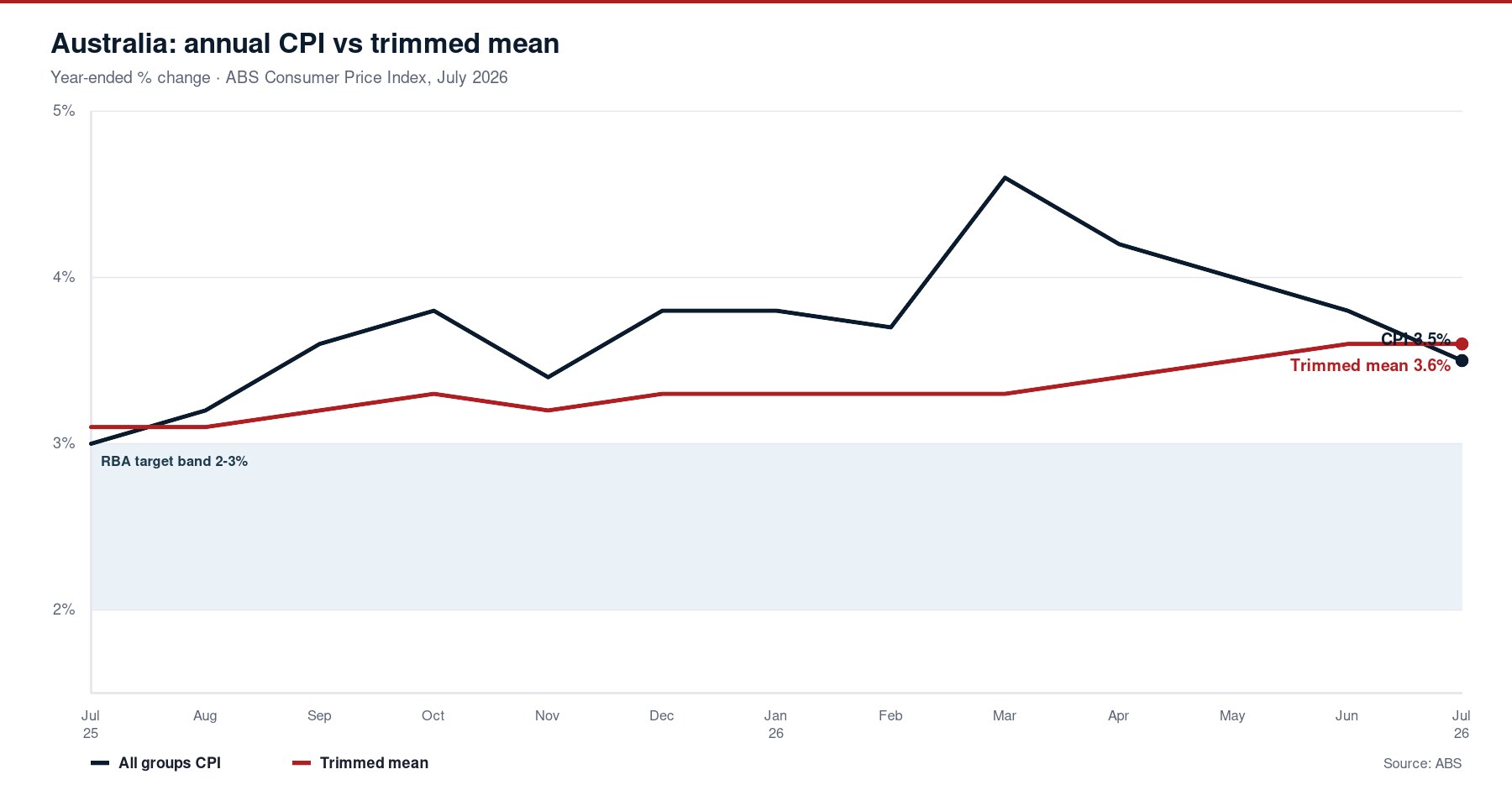
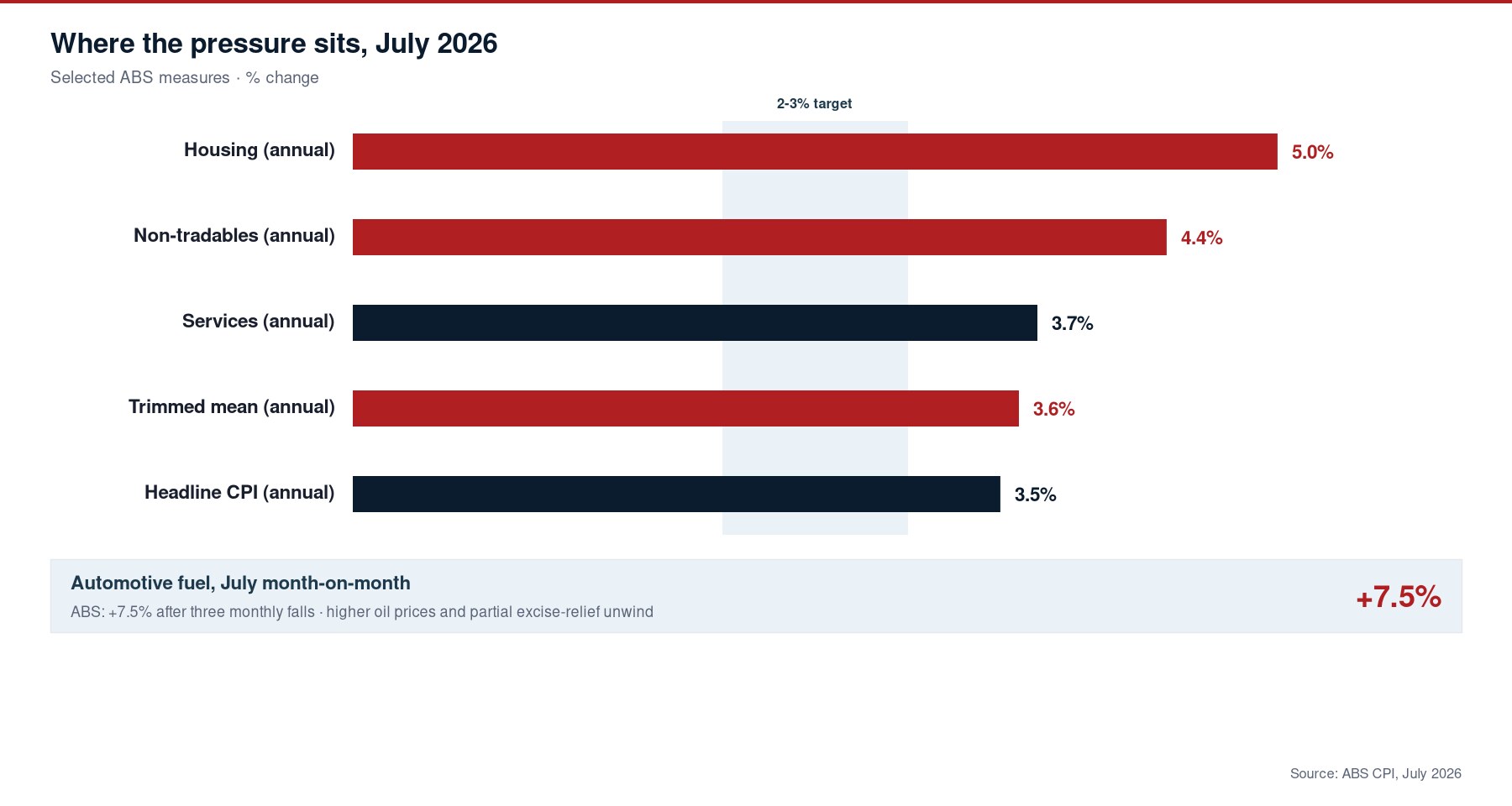
The Australian Bureau of Statistics reported that annual CPI eased from 3.8% in June to 3.5% in July. But during July itself, prices rose 1.0% in original terms, stronger than economists had expected, and underlying inflation remained stubborn. That combination matters because the Reserve Bank had already considered raising rates again at its August meeting.
The headline improved - but the monthly number was hot
Annual CPI fell from 3.8% to 3.5%. That is good news. But July prices rose +1.0% in one month, and Reuters reported economists had expected roughly +0.8%.
So inflation was slowing on an annual basis, but the latest monthly movement was stronger than expected. That is the contradiction. A lower annual inflation rate does not mean prices fell - it means prices are rising more slowly than they were a year ago.
Fuel jumped 7.5%
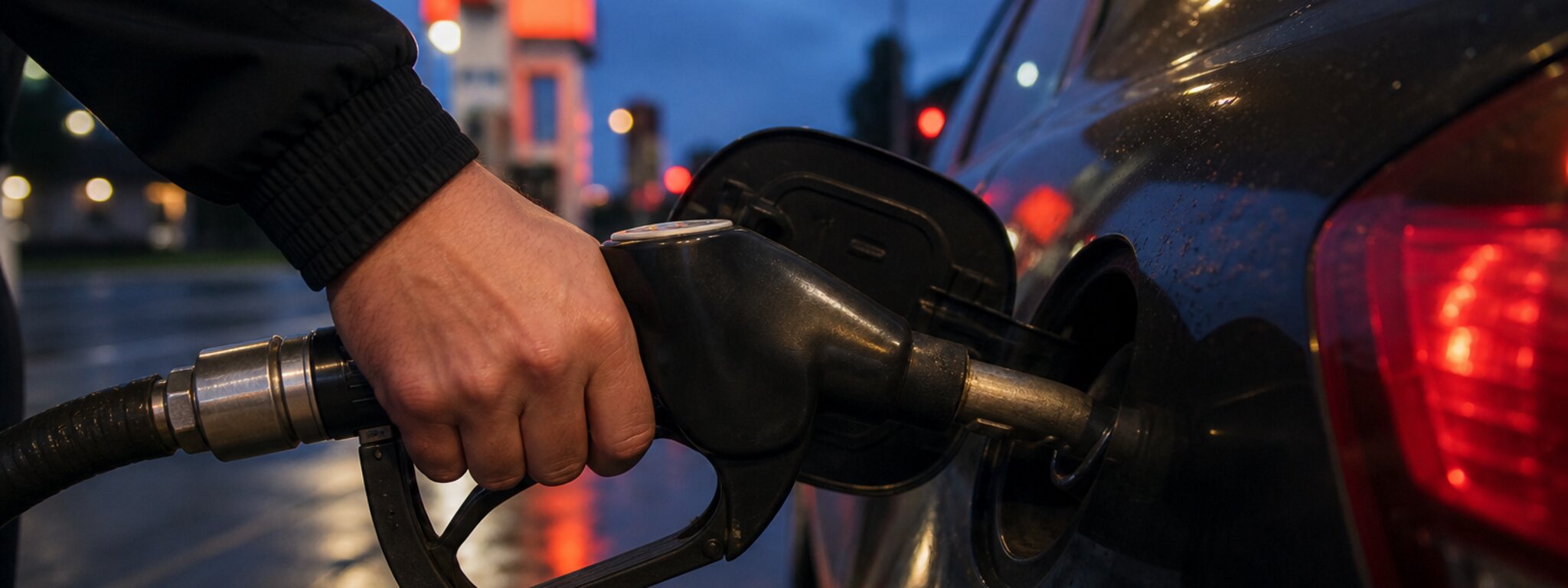
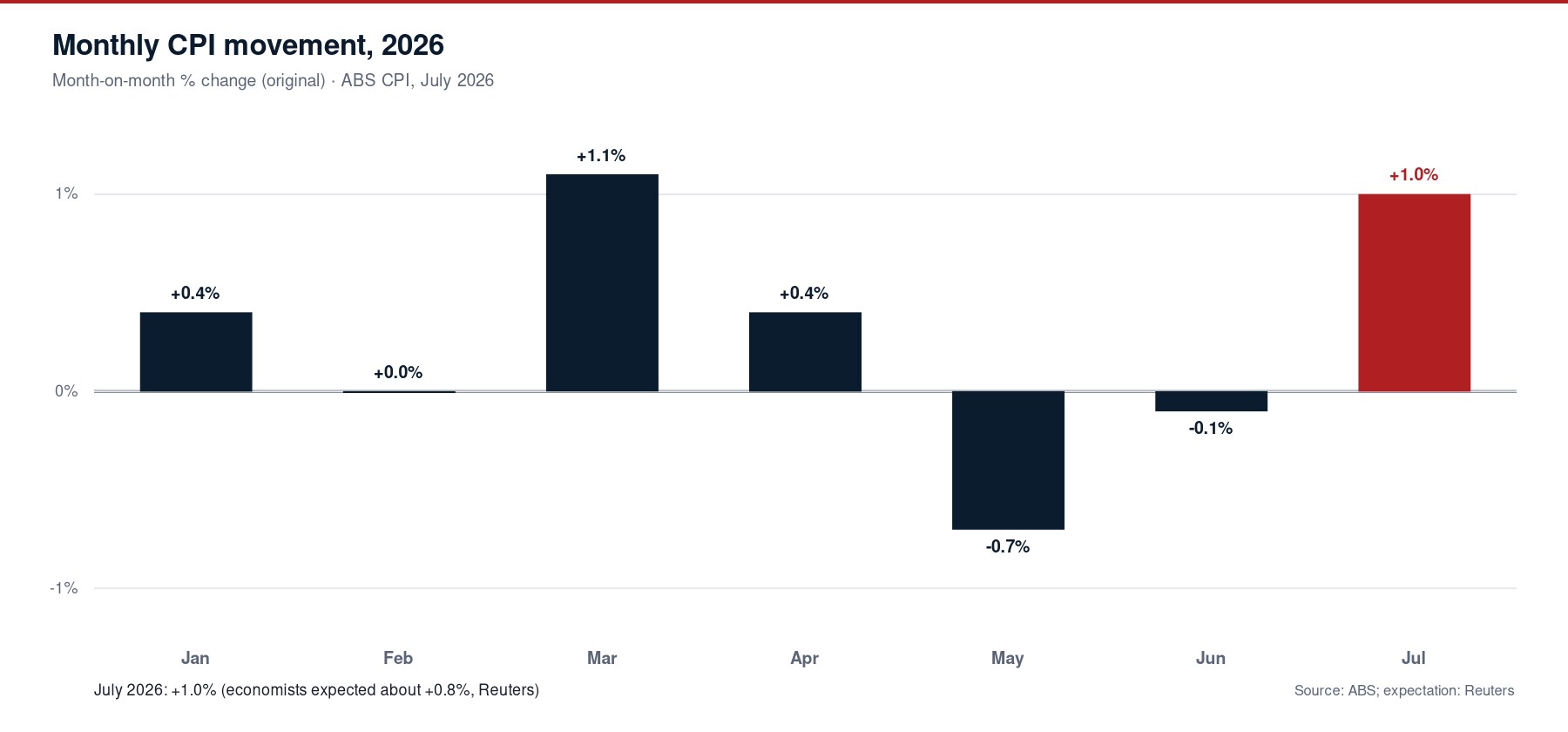
One major driver was petrol. Automotive fuel prices rose 7.5% in July, after falling for three consecutive months. The ABS said higher global oil prices and the partial unwinding of fuel-excise relief contributed to the increase.
Fuel can be volatile, so the RBA does not focus on petrol alone. That is why the underlying inflation number matters even more.
Underlying inflation stayed at 3.6%
Trimmed-mean inflation - one of the measures the RBA uses to look through unusually large price movements - rose 0.5% in July. Annual trimmed-mean inflation remained 3.6%, stronger than economists had expected.
So while headline inflation fell to 3.5%, underlying inflation did not improve. That is a much less comfortable result for the RBA.
The pressure is not just fuel
July’s inflation data also showed broader domestic pressure. Services inflation was 3.7% annually. Non-tradable inflation - prices more closely linked to the domestic economy - was 4.4% annually. Housing inflation remained high at 5.0%.
So the inflation problem cannot be explained by petrol alone. Some parts of inflation are easing; others are still proving sticky.
Why the RBA matters here
The RBA cash rate is currently 4.35% after three increases during 2026. At its August meeting, the Board considered two options: leave rates unchanged, or raise the cash rate by 25 basis points.
It ultimately held rates steady. But the minutes showed that another increase was genuinely under consideration - which means July’s hotter-than-expected inflation report landed at a particularly important time.
Markets immediately changed their view
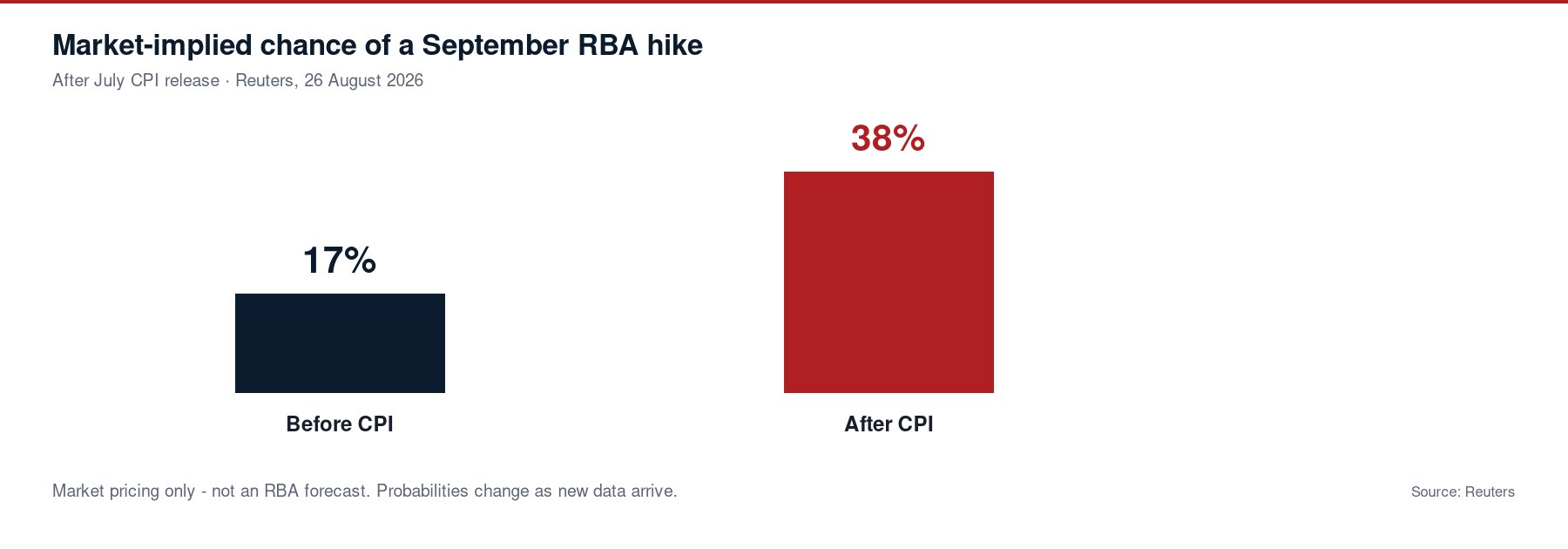
Before the CPI release, markets were pricing only about a 17% chance of a September RBA rate hike. Reuters reported that this jumped to around 38% after the inflation data - up from about 17%.
But this needs to be understood correctly: 38% is market pricing, not an RBA forecast or decision. Those probabilities can change quickly as new data arrives. The important point is that markets saw the July inflation result and became significantly more worried about another rate increase.
Economists are not all expecting September
There is no agreement that the RBA will hike next month. Deutsche Bank moved to forecasting a 25 basis point hike in September, while other economists have suggested a later move could be more likely.
So the correct conclusion is not that “the RBA will raise rates in September.” It is that the chance of another rate rise has increased materially.
What does this mean for households?
If the RBA raises the cash rate by another 25 basis points, it would move from 4.35% to 4.60%. That would likely mean further pressure on variable mortgage rates and borrowing costs. But no such decision has been made.
The RBA still has to balance two risks: inflation staying too high for too long, and interest rates slowing the economy too much.
What happens next?
The next RBA Monetary Policy Board meeting is 28-29 September 2026, with the rate decision due on 29 September. Between now and then, the RBA will receive more economic data that could strengthen or weaken the case for another hike.
The bottom line
Australia’s annual inflation rate fell from 3.8% to 3.5%. That is progress. But July itself was hotter than expected: prices rose 1.0% in the month, fuel jumped 7.5%, and underlying trimmed-mean inflation remained 3.6% annually. The RBA had already considered another rate increase before these numbers arrived - which is why rate-hike expectations jumped.
The real question is no longer simply whether inflation is falling. It is whether inflation is falling fast enough for the RBA to stop raising rates.
Key numbers
| Measure | Latest figure |
|---|---|
| Annual CPI | 3.5% |
| June annual CPI | 3.8% |
| July CPI, monthly | +1.0% |
| Trimmed mean, annual | 3.6% |
| Trimmed mean, July | +0.5% |
| Fuel prices, July | +7.5% |
| Current cash rate | 4.35% |
| September hike pricing before CPI | ~17% |
| After CPI | ~38% |
| Next RBA decision | 29 September 2026 |