Navarro, one of President Donald Trump's trade advisers, also told Canadian lobbyists on K Street to "get the hell out of our country." The trade fight is already a live ballot issue in those border states. Ottawa's line remains that its priority is protecting Canadian workers, farmers, families and businesses from what it calls unjustified US actions.
TL;DR: Navarro threatened Canada with heavier costs if it "interferes" in Maine or Michigan midterms, without defining the word. Same day, US bans on some Canadian alcohol, dairy byproducts, motorcycles and molasses took effect. Trump wants Canada back at the table in three to four weeks with an apology. No new sanctions tied to elections have been announced.
Status note: Checked 30 September 2026 against CBC reporting via the1news. Navarro's "interfere" charge is political rhetoric so far, not a published enforcement order. Trade measures and campaign messaging can still move.
What Navarro said in Washington
Navarro was speaking generally about Trump administration trade policy when the talk turned to the Canada dispute. He attacked Canada's lobbying record in Washington and said past success had made Ottawa think the old playbook still worked.
"The problem you have is you lobby this country and you've been successful in the past and you think you can keep doing that," he said. Then came the line that will travel: "Memo to Canada: You cannot do that. That game is up and if you interfere in our elections in Maine or Michigan you will pay even more dearly."
He did not elaborate. He named no Canadian official, no programme, and no concrete act that would count as interference. The charge sits on top of an open trade war, not on a published intelligence finding or a new statute.
K Street is the shorthand for Washington's lobbying corridor. Canadian provinces and businesses have hired representatives there since Trump returned to the White House in early 2025. During the CUSMA talks in Trump's first term, Ottawa also worked US labour and business groups to make its case. Navarro is treating that normal advocacy as the problem.
Why Maine and Michigan matter on a midterm map
Navarro did not invent those two states at random. Both sit on the northern border. Both have Senate fights where Canada trade is already in the air.
In Michigan, Democratic Senate nominee Abdul El-Sayed has made trade with Canada a central ballot issue for November. Auto plants, parts suppliers and farm exporters in the state feel tariff and ban risk in real time. A trade war next door is not abstract for voters who clock into those plants.
In Maine, Republican Senator Susan Collins has opposed the trade war. Maine sells seafood, wood products and other goods into Canadian and US markets that tangle when tariffs spike. Collins's posture puts her at odds with the White House escalation, which is why a Trump adviser naming Maine lands as a political shot as much as a trade warning.
Online takes may invent a finished Canadian plot to swing those races. Nothing in Navarro's remarks supplied that plot. He issued a threat conditional on "interference" he left undefined, while the actual policy news of the day was import bans already on the books.
The ban that took effect the same morning
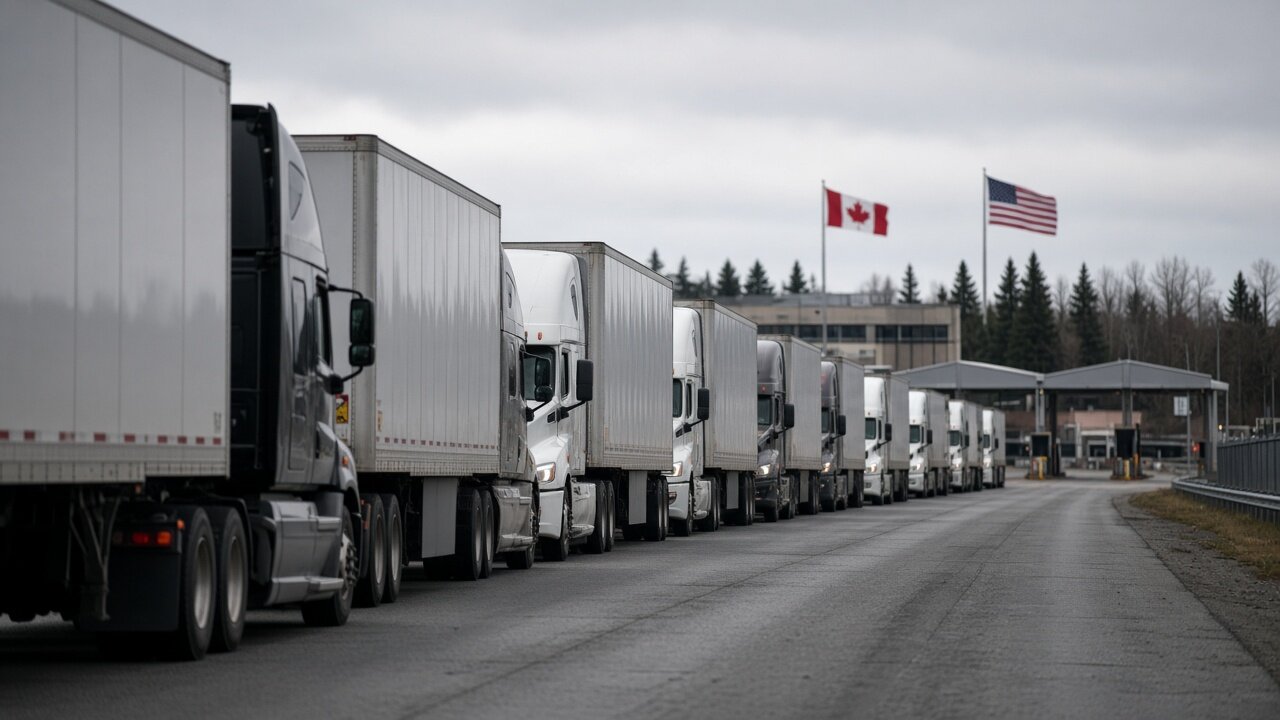
This piece updates the US import ban that went live at 12:01 a.m. Eastern Time on Tuesday. Selected Canadian alcohol, dairy byproducts, motorcycles and molasses are now shut out of the US market. That is a targeted list, not a blank cutoff of Canada-US trade.
The White House announced the bans and some additional tariffs a few days after Canada hit US goods with counter-tariffs earlier this month. Both moves followed the collapse of trade talks in August. The sequence is familiar: talks stall, each side escalates, then officials talk about returning to the table while the new measures bite.
For Canadian distillers, dairy processors, motorcycle makers and molasses shippers, Tuesday was not a speech day. It was the first calendar day their products face the new wall. Navarro's midterm language sits on top of that commercial shock, which is why the politics and the shipping schedules now move together.
Trump's three-to-four-week bet, and Ottawa's reply
Speaking to reporters in the Oval Office on Monday, Trump said he expects Canada back within three or four weeks, ready to drop its tariffs and, in his telling, apologise. "I think what's going to happen is over the next three or four weeks, they're going to come to us and they're gonna say, 'We're gonna get rid of all the tariffs,'" he said.
He also repeated that Canada has treated the United States "unfairly" and called it "one of the worst countries in the entire world" on trade. Those lines are campaign-ready. They are not a signed deal.
Canada-US Trade Minister Dominic LeBlanc's office answered on Monday with a narrower priority: "protecting and supporting Canadian workers, farmers, families and businesses from these unjustified actions." That is not the apology Trump described. It is a defensive brief for Canadian producers already taking tariff and ban pain.
Whether Ottawa returns in three to four weeks is unsettled. Whether any return includes the apology Trump floated is unsettled. What is settled is that selected Canadian goods are already banned, talks collapsed in August, and a senior White House trade voice has now tied future pain to midterm "interference" he would not define.
Lobbying, CUSMA memory, and what "interfere" does not mean yet
Readers who remember the first Trump term know that Canadian advocacy in Washington is not new. During the CUSMA negotiations, Ottawa leaned on US unions and business groups. Provinces later hired their own DC voices after 2025. Navarro is reframing that history as election meddling risk in Maine and Michigan.
That reframing matters for how the midterm fight will be narrated. A Canadian province hiring a DC firm to explain dairy rules is ordinary trade politics. Calling the same activity "interference" without examples turns a lobbying dispute into an election security story. So far, the public record has the label, not the dossier.
Navarro has lashed out at Canada before. His Tuesday remarks fit that pattern: hard language, border-state names, and a cost threat layered onto measures already in force. They do not, by themselves, create a new ban, a new tariff rate, or a published list of banned Canadian contacts.
Where things stand
As of 30 September 2026, three facts travel together. First, Navarro threatened heavier costs if Canada "interferes" in Maine or Michigan midterms and told Canadian lobbyists to leave. Second, he did not define interference, and no separate midterm-linked sanction has been announced beside the goods bans that took effect Tuesday. Third, Trump expects Canada back in three to four weeks with an apology; LeBlanc's office is still talking protection of Canadian workers and firms, not that apology.
A speech is not a finished case of Canadian election interference. A targeted import ban is not a full Canada-US trade cutoff. Both can worsen if talks stay dead and campaign season heats the border states. For now, the locked story is the threat language plus the Tuesday bans, not a proven Canadian plot to swing Maine or Michigan.