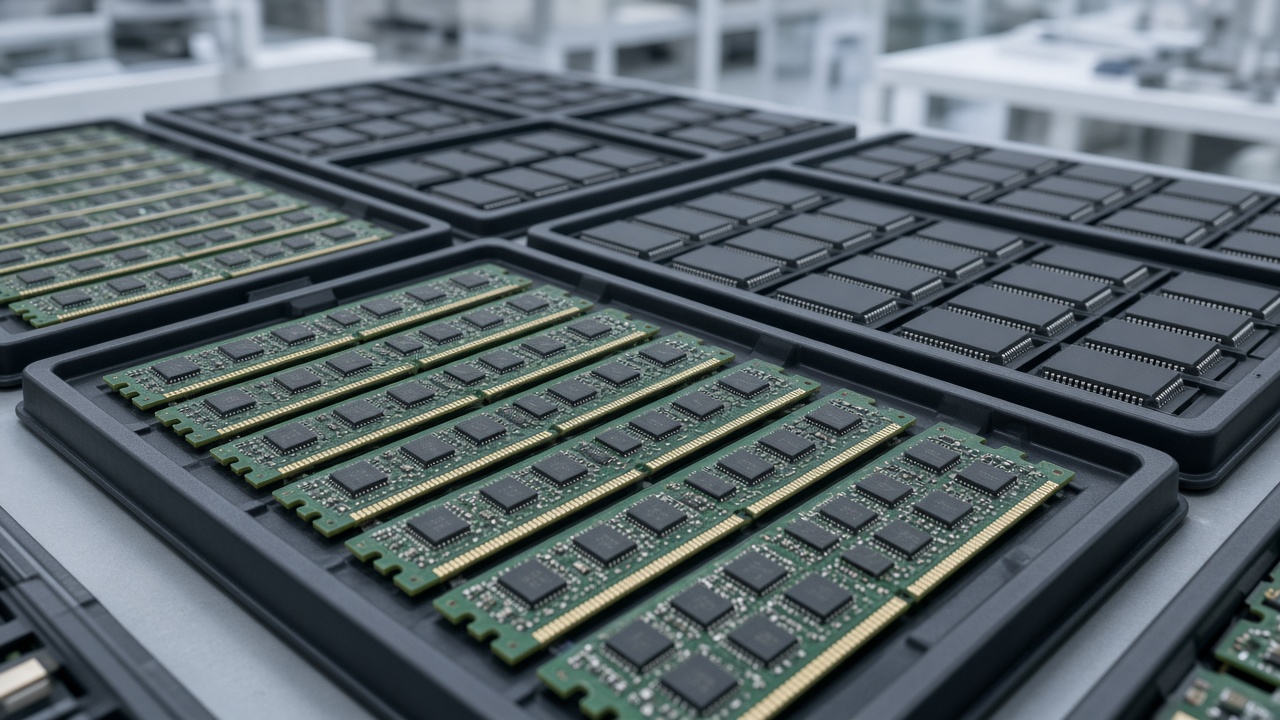
TL;DR: Micron reported fiscal Q4 revenue of $54.229 billion, up about 379% year on year, beating LSEG consensus near $51.07 billion. Operating profit hit $43.751 billion. Mehrotra says HBM demand outruns classic DRAM through 2028 and most next-year HBM is already sold. This is a supplier crunch story, not proof that PC memory is cheap again tomorrow.
Status note: Checked 2 October 2026 against ETNews coverage of Micron's fiscal Q4 FY2026 results (June through August 2026), disclosed around 30 September 2026, and company guidance for fiscal Q1 FY2027. Figures and Mehrotra comments reflect that disclosure window. Consumer DRAM pricing and retail availability can move on separate cycles from data-center contracts.
How memory got pulled into the AI build-out
For a decade, memory chips were often treated as a cyclical commodity tied to phones and PCs. When demand softened, prices collapsed and fabs idled. The AI training and inference wave rewired that story. Hyperscale cloud operators and chip designers now fight for stacks of DRAM that can feed accelerators at high bandwidth, not just large capacity on a laptop stick.
High-bandwidth memory, or HBM, sits close to the processor and moves data in wide, fast bursts. That is why Nvidia-class AI systems and their cloud tenants became Micron's center of gravity. The company has posted six straight record quarters since fiscal Q3 2025, a streak that mirrors how capital flooded into AI infrastructure even as consumer electronics stayed uneven.
What fiscal Q4 FY2026 showed on the scoreboard
Micron's fiscal fourth quarter, covering June through August 2026, landed with revenue of $54.229 billion, up roughly 379% from $11.315 billion a year earlier, according to ETNews reporting on the release. LSEG consensus had been near $51.07 billion, so the print beat the street snapshot traders were using.
Operating profit came in at $43.751 billion, about twelve times the $3.654 billion reported in the year-ago quarter on the same basis. Cloud Memory revenue reached $16.3 billion while Core Data Center revenue hit $18 billion. Together those two lines accounted for more than 60% of company revenue, underscoring how lopsided today's demand is toward servers and accelerators rather than retail PCs.
The sixth consecutive record quarter since fiscal Q3 2025 is not a rounding error. It is the financial echo of long-term supply agreements, aggressive cloud capex, and a product mix tilted toward premium memory types that are harder to ramp quickly.
Guidance that keeps the bar high
Looking ahead to fiscal Q1 FY2027, Micron guided revenue between $60 billion and $63 billion, above market expectations near $57 billion cited in the same coverage. Guidance that high tells you management sees backlog and pricing power still aligned with AI customers, not a immediate normalization back to pre-boom run rates.
Investors often treat memory guidance as a weather vane for capex plans at Amazon, Microsoft, Google, Meta, and the chip houses that sell into them. A wide beat plus an above-consensus outlook tends to ripple through semiconductor equipment names and cloud cost debates in the same week.
Mehrotra on HBM tightness into 2028
On the call, Mehrotra drew a sharper line on supply than some bulls wanted. He said supply and demand in fiscal 2027 and fiscal 2028 look much tighter than in 2026, and that Micron has no visibility yet on when balance returns. HBM bit growth, he added, should outpace traditional DRAM through 2028, and most of next year's HBM volume is already under contract.
That language matters for anyone expecting a quick glut. Contracted HBM means hyperscalers and accelerator vendors have locked in slices of future output. It does not automatically translate into empty shelves at Best Buy, but it does mean the premium memory lines feeding AI racks stay prioritized over opportunistic spot markets.
Mehrotra also pointed to physical AI and humanoid robots as longer-run demand pools. Those markets are early compared with cloud training clusters, yet they reinforce why Micron is expanding advanced packaging and fab footprints instead of treating the spike as a one-year blip.
Fab commitments: Idaho, New York, and supplier deals
Capital follows the tightness narrative. Micron disclosed 26 supply chain agreements totaling about $32 billion in commitments, up from 16 agreements worth about $22 billion in the prior framing. Those deals stretch across equipment, materials, and construction partners needed to bring new cleanroom lines online on schedule.
On geography, the Idaho ID1 site is on track for wafer output in mid-2027, with ID2 targeted for late 2028, while a New York fab is slated for early 2030, per ETNews summaries of company plans. Multi-year lead times are normal in leading-edge memory, which is why Mehrotra's 2028 comment lands now, not as a distant footnote.
Building fabs does not instantaneously create HBM stacks. Yield learning, packaging throughput, and tester capacity still gate how fast revenue converts from groundbreaking photos to shippable modules.
What this does and does not mean for buyers
If you run cloud infrastructure or buy AI servers, Micron's quarter reads as continued scarcity pricing on the fastest memory tiers, with visibility extended by contracts. If you are a PC buyer or small business refreshing laptops, this earnings release is not a promise that DDR5 modules flood back into discount bins. Consumer DRAM can ease on its own cycle even while HBM stays sold out.
Competitors Samsung and SK hynix face the same HBM physics. Micron's record streak is company-specific execution, but the structural AI demand story is industry-wide. Any single quarter beat can still reverse if capex budgets pause, export rules shift, or a macro shock freezes server orders.
Where things stand
On the public record around 30 September 2026, Micron posted fiscal Q4 FY2026 revenue of $54.229 billion and operating profit of $43.751 billion, beating consensus revenue near $51.07 billion, with cloud and data-center memory above 60% of sales. Fiscal Q1 FY2027 guidance of $60 billion to $63 billion sits above a market near $57 billion. Mehrotra warned that fiscal 2027 and 2028 supply/demand look tighter than 2026, with HBM growth outpacing traditional DRAM through 2028 and most next-year HBM already contracted. Fab and supplier commitments expanded to 26 agreements worth about $32 billion, with Idaho and New York timelines stretching into 2030.
What remains open is the exact month when balance returns, how consumer memory pricing diverges from data-center contracts, and whether rival ramps close any gap. The quarter confirms AI-driven memory strength and extended tightness on HBM; it is not evidence that every memory category is easy to buy again tomorrow.