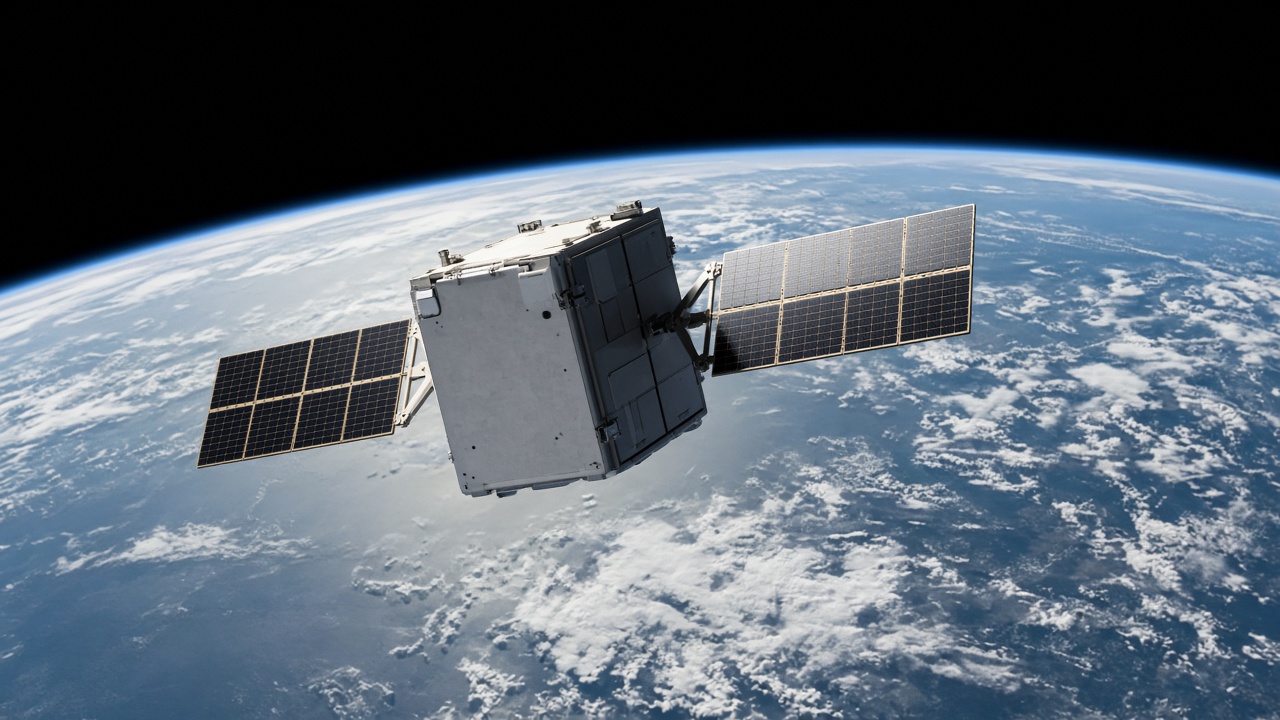
TL;DR: Google's Project Suncatcher MVP satellite launched on SpaceX's Transporter-18 ride on 1 October 2026 with four Trillium TPUs and about one kilowatt of solar power. Google confirmed the chips operate as designed in orbit, the first in-space test of its AI silicon. Follow-on missions with laser links are planned for 2027. This is a tech validation, not a live orbital cloud you can rent today.
Status note: Checked 2 October 2026 against CryptoBriefing reporting dated 1 October 2026 and Google's public confirmation of the MVP flight. Orbital performance claims are limited to operating as designed; Google has not described continuous production AI workloads or customer-facing orbital compute services.
Why Google is talking about space at all
Earth-bound AI clusters already strain power grids, water permits, and local politics. Hyperscalers keep building campuses, but the energy math for exascale training gets harder every year. In late 2025 Google pitched Project Suncatcher as a long-range idea: put efficient AI accelerators on small satellites where solar flux is steady and real estate fights are absent.
The concept is not new science fiction. It is an engineering bet that future TPUs, tighter power budgets, and cheaper launch cadence might make orbital inference or preprocessing viable for some workloads. October 2026's flight is the first time Google put that story on a rocket instead of a slide deck.
What launched on 1 October 2026
CryptoBriefing reported that the minimum viable product satellite became the first Project Suncatcher hardware to reach orbit. It rode SpaceX's Falcon 9 Transporter-18 mission, part of the rideshare line that bundles many small payloads on one launch. The bus is roughly refrigerator-sized, a form factor familiar in the cubesat and microsat world where volume and mass drive every watt of budget.
Onboard are four Trillium-generation tensor processing units, Google's label for its latest TPU generation tuned for matrix math in AI training and inference. Google said the cluster delivers about the compute of one data-center server worth of Trillium silicon, a comparison meant for engineers rather than shoppers. Power comes from solar panels sized for about one kilowatt, enough to keep the TPUs alive in demo mode but not a full terrestrial rack draw.
Trillium TPUs in plain terms
TPUs are application-specific accelerators. Where a CPU runs general code, a TPU is built to hammer the linear algebra layers that dominate neural networks. Trillium is the generation Google is rolling into cloud regions on the ground; putting the same generation on orbit tests whether radiation, thermal swings, and limited repair options break assumptions that hold in a climate-controlled data hall.
Google's confirmation that the hardware is operating as designed is the headline validation. It means boot, power sequencing, and baseline health checks passed in the space environment for this mission profile. It is not the same as running a sustained training run for a frontier model or serving paying cloud customers from low Earth orbit.
What orbit solves and what it does not
Advocates for space compute point to continuous solar exposure, natural cooling paths, and geopolitical neutrality over the ocean. Skeptics point to launch cost, latency to ground users, radiation hardening, and the nightmare of swapping a failed DIMM when the nearest technician is in Kazakhstan or Florida, not the aisle of a server farm.
Google's public messaging has stayed disciplined: this MVP proves the AI hardware can live on a small satellite bus. It has not promised immediate orbital data centers serving Search, YouTube, or Vertex customers. CryptoBriefing noted remaining tech hurdles before any operational space compute fleet, without inventing test temperatures or radiation numbers beyond what the company disclosed.
Roadmap hints: 2027 and laser links
Follow-on missions are on the calendar for 2027, including experiments with laser links between spacecraft. Laser inter-satellite links matter because they could reduce reliance on ground stations for every packet, a bottleneck if you ever wanted a constellation to behave like a distributed computer instead of isolated experiments.
SpaceX's Transporter cadence gives Google a recurring ride share slot, but schedule slips and payload integration issues are routine in aerospace. Treat 2027 plans as intent subject to launch manifests and regulatory filings, not a guaranteed service launch date for cloud buyers.
Competitive context without hype
Other tech giants watch power constraints too, but Google's move is distinctive in putting its own AI silicon on its own satellite path under a branded program. Amazon, Microsoft, and Meta are investing in terrestrial nuclear deals and grid upgrades rather than announcing TPUs in orbit. That does not mean they ignore space; it means Google's October flight is a visible milestone in a crowded AI infrastructure race.
For investors, the near-term revenue impact is negligible. For engineers tracking TPU roadmaps, it signals that Google wants optionality if ground power costs or permitting slow campus expansions.
Where things stand
On 1 October 2026, Google confirmed that Project Suncatcher's MVP satellite launched on Falcon 9 Transporter-18 with four Trillium TPUs and about one kilowatt of solar power, and that the AI hardware is operating as designed in orbit. That is the first validation of Google AI chips in space under the Suncatcher program announced in late 2025. Follow-on flights including laser-link work are targeted for 2027.
What is not settled is any production orbital data-center service, customer SLAs, or economics versus ground build-outs. The flight is a hardware proof, not an invitation to migrate workloads off the planet this quarter.
Sources: CryptoBriefing on Google's Project Suncatcher MVP launch and Trillium TPU validation, 1 October 2026.