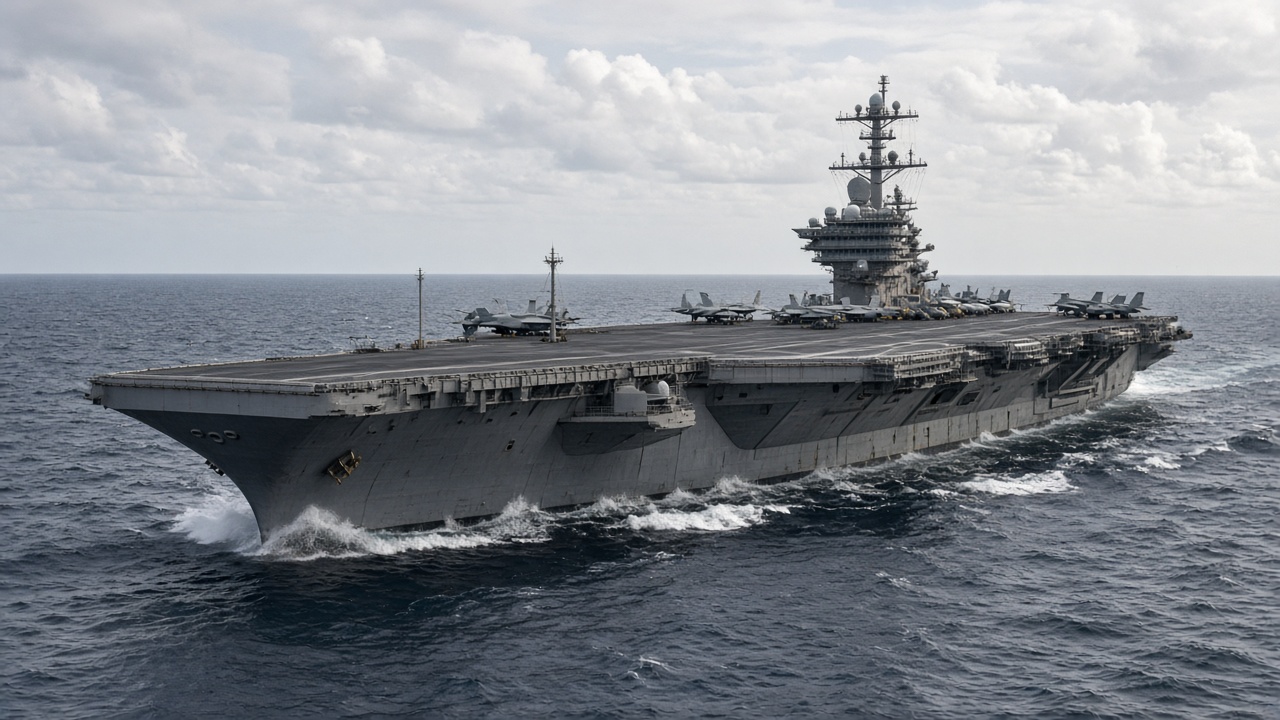
TL;DR: A U.S. official told Al Jazeera the USS Theodore Roosevelt carrier group left San Diego on Sunday bound for the Middle East, with a Makin Island amphibious group and more than 2,000 Marines sailing the next day. By late November the U.S. could have three carriers and two amphibious groups near Iran, on top of roughly 50,000 troops already there. Trump still talks victory; Iran's seven-day Qatar plan remains rejected. This is an anonymous force posture tip, not a published Pentagon deployment order.
Status note: Checked 2 October 2026 against Al Jazeera's report citing a U.S. official, related Trump and cabinet comments on Fox and NBC, Treasury sanctions actions this week on Iranian rail and auto sectors, and prior AMU coverage of the Hormuz sequencing fight. Ship movements and troop totals can shift with weather, maintenance, and classified adjustments. No signed public order confirming every unit named here was available at check time.
What changed since the Hormuz bargaining table stalled
For weeks the visible fight has been diplomatic: Iran floated a seven-day roadmap through Qatari mediators that would reopen the Strait of Hormuz, ease sanctions, and tie nuclear talks to an end of the U.S. naval blockade, with regional ceasefire language for Lebanon and Yemen. President Donald Trump rejected that package. National security adviser Mike Waltz told NBC that releasing frozen funds or lifting sanctions is non-negotiable while global sanctions and seven U.N. Security Council resolutions remain in play.
Foreign Minister Abbas Araghchi told NBC Iran is fully prepared to resume the war, even as he posted that he came to New York to forge peace. That split screen is familiar: hard lines for domestic audiences, shuttle diplomacy for cameras. What is new in early October is the scale of metal Washington is putting on the water while those lines stay frozen.
The carrier and Marine moves Al Jazeera reported
According to Al Jazeera's U.S. official, the USS Theodore Roosevelt carrier strike group left San Diego on Sunday, 28 September 2026, headed for the region. The next day the Makin Island Marine expeditionary force, with more than 2,000 Marines, also sailed. The official said that by the end of November the United States could have three aircraft carriers and two amphibious ready groups positioned around Iran.
Carrier strike groups are floating airfields; amphibious groups add Marines and landing craft for raids or evacuations on short notice. Three carriers plus two amphibious groups is not a routine training rotation. It is the posture planners use when they want strike options, blockade enforcement, and visible deterrence together.
Troops, F-35s, and what Hegseth signaled
The same reporting frame puts about 50,000 U.S. troops already in the broader region, with additional F-35 squadrons flowing in. Defense Secretary Pete Hegseth has said publicly he is ready to act if Trump orders new strikes. That language matters because it tells Iran's commanders the pause in major exchanges is policy, not incapacity.
Washington's stated goal, in the official's telling to Al Jazeera, is to keep military options on the table even while diplomacy continues. Whether that speeds a deal or hardens Tehran's mobilization is still an open question.
Trump on Fox and the midterm calendar
Trump told Fox he expects to win the war very soon and that a return to major action is possible, though he would rather not spell out timing before the November midterm elections. The line confirms the White House still treats the conflict as winnable on its terms while negotiators meet in New York and Doha.
An AP-NORC poll finding cited in the same news cycle puts nearly 70% of Americans saying the war is not worth fighting. That domestic headwind does not stop carrier orders, but it shapes how loudly officials talk about escalation before November.
Sanctions pressure parallel to the naval surge
This week the Treasury Department added sanctions hitting Iranian rail and automotive sectors, continuing the economic squeeze alongside the naval blockade story. Washington is tightening multiple lanes at once, not betting everything on one Hormuz headline.
How to read an anonymous official leak
Al Jazeera's sourcing is a U.S. official speaking on condition of anonymity, not a photographed Pentagon press release with hull numbers and exact arrival dates. Anonymous tips can preview orders already signed or signal Iran and domestic audiences; they can also shift if talks break open.
AMU's earlier Hormuz piece tracked the sequencing fight: relief first versus nuclear steps first. This update is the force posture side: more carriers, more Marines, more jets, with that sequencing argument unchanged and Trump's rejection of the seven-day plan still standing.
Where things stand
On 2 October 2026, Al Jazeera reported that a U.S. official said the Theodore Roosevelt carrier group departed San Diego on 28 September for the Middle East, with the Makin Island group and 2,000-plus Marines following, aiming toward three carriers and two amphibious groups near Iran by late November, atop roughly 50,000 U.S. troops already in the region and extra F-35 deployments. Hegseth has said he is ready if Trump orders new strikes. Trump told Fox he expects to win soon and may return to action but prefers not to detail timing before midterms. Iran's seven-day roadmap via Qatar remains rejected; Waltz calls frozen funds and sanctions relief non-negotiable; Araghchi warns Iran can resume fighting while claiming a peace mission in New York. Treasury sanctioned Iranian rail and auto this week. Nearly 70% of Americans in AP-NORC polling say the war is not worth fighting.
What is not settled: exact arrival dates for each strike group, whether diplomacy produces a new sequencing compromise, and whether anonymous leaks match the classified order set. The buildup is real enough to track; the war's next chapter is still a policy choice, not a weather forecast.
Sources: Al Jazeera on a U.S. official describing a third carrier and amphibious deployments toward Iran, 2 October 2026; prior AMU coverage of Hormuz sequencing and Qatar-mediated talks (29 September 2026 desk).