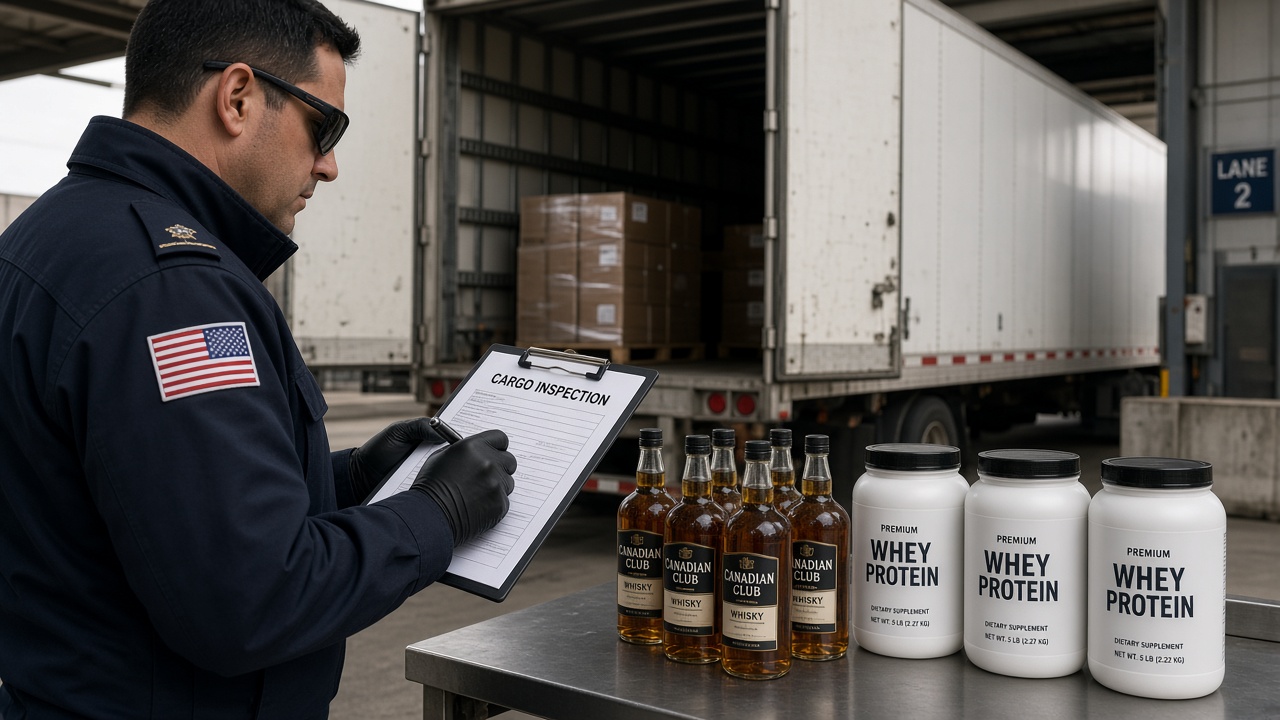
Orders signed by President Donald Trump on 8 September now bite. Canadian liquor exporters lose a market that took roughly 90 to 93 percent of Canadian alcohol exports in 2025, worth about C$1 billion. Prime Minister Mark Carney still frames the package as modest next to other US actions, while saying it will hurt the sectors in the crosshairs. That gap between a sharp sector hit and a national trade shutdown is the story.
TL;DR: From early Tuesday the US blocked Canadian alcohol, whey and dairy products, and motorcycles. Liquor exposure is about C$1bn a year, mostly bound for the United States. Carney calls the hit modest versus other US tariffs, but painful for those firms. Do not treat this as a full Canada-US trade cutoff.
Status note: Checked 29 September 2026 against BBC reporting on the effective time and product scope. USTR Jamieson Greer has signalled no urgency on Canada talks. Watch White House or USTR notices if product lines are added, and Canadian provincial rules if liquor shelves change again.
What took effect at midnight
Washington framed the orders as a response to Canadian counter-tariffs and what the White House calls discrimination against US goods, especially around dairy, cars and alcohol. The ban covers alcohol, whey used in dairy and protein products, and motorcycles. Those are targeted lines, not a blank ban on Canadian exports.
Spirits Canada has warned that industry consequences could be significant. Scotiabank economist Derek Holt described the move as face-saving rather than substantive for the wider economy. Both readings can sit together: a distillers' association can face a hard commercial shock while the national accounts barely budge.
For readers who only scan headlines, the useful filter is simple. A ban that hits liquor, whey and bikes is real for those shippers. It is not the same thing as closing the border to timber, oil, autos or everything else Canada sells south.
What this sits on top of
Tuesday's bans stack on an already thick tariff fight. The United States already applies 50 percent tariffs on some Canadian product lines and 25 percent tariffs on Canadian-built cars. Canada has retaliatory tariffs on a long list of US goods. Provinces have already stopped or curtailed US liquor sales on their shelves. None of that vanished at midnight. The import ban is another layer, not a clean restart from zero.
Trade talks are cold. Greer has said there is no urgency on Washington's side to reopen Canada negotiations. Trump has accused Canada of treating the United States unfairly. Carney's public line is that the bans will hurt targeted sectors while remaining modest against the wider set of US measures already in force.
Who should care, and what not to believe
Canadian distillers and alcohol exporters that sold heavily into the US market face the sharpest commercial shock. US buyers of Canadian spirits lose a supply channel overnight. Whey and motorcycle traders sit in the same rulebook, even if their volumes differ from liquor. Retailers and importers should treat "Canada trade cutoff" or "full embargo" headlines as overreach unless Washington publishes a far wider order.
The false version circulating online treats every tariff headline as Armageddon for the whole relationship. The locked facts do not support that. This is a live, sector-specific import ban effective 29 September, signed 8 September, aimed at Canadian countermeasures. It matters for the firms named. It does not rewrite the entire Canada-US trade map in one night.
Sources: BBC, US ban on Canadian alcohol and dairy comes into effect.