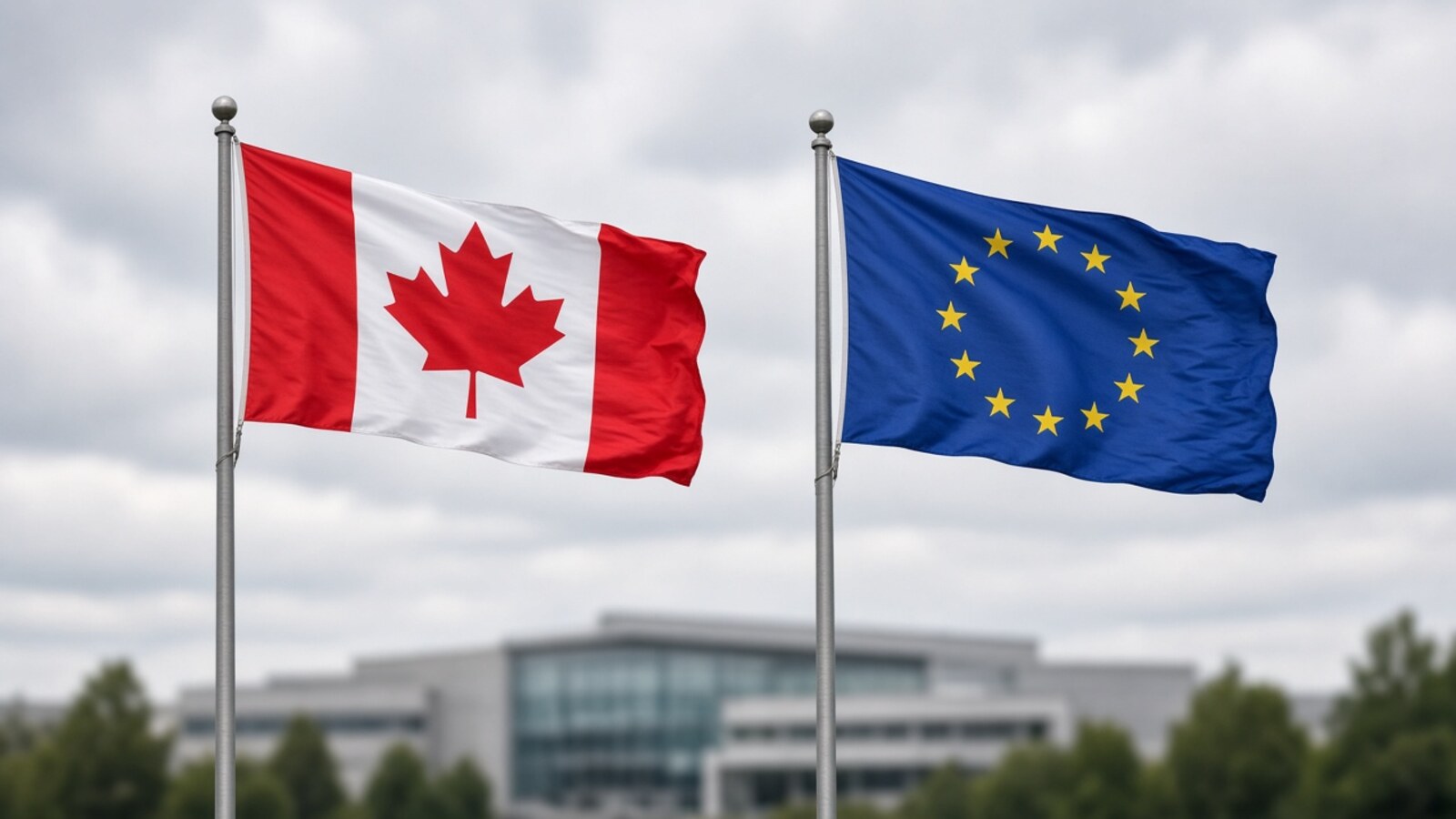
On 17 September 2026, in her State of the European Union address, von der Leyen proposed Canada as the first EU associate member under an "Alliance for the Future" built on the existing CETA trade deal. Trump, speaking en route to North Carolina, said the proposal was laughable.
Canada is not an EU member. Associate membership is a proposal, not a done deal. Ottawa welcomed deeper EU ties. Washington is watching for what it calls hostile intent.
TL;DR: The EU Commission president proposed a new associate-member track for Canada. Trump threatened very serious tariffs or cutting a lot of Europe trade if he judged the move hostile. Good intention, he said, would be fine; bad intention would bring heavy tariffs. The category has never existed before and would need unanimous member approval for membership-like steps. Canada and the U.S. are already in a tariff fight.
Status note: Checked 27 September 2026. Von der Leyen's proposal and Trump's tariff warning are public. No associate-member treaty is in force. Tariff threats can escalate or cool with the next speech. Treat "Canada joined the EU" headlines as false.
What von der Leyen proposed
Associate membership, as pitched, would be a new EU category. The Commission has never had that bucket before. Von der Leyen framed it as an Alliance for the Future building on CETA, the Comprehensive Economic and Trade Agreement already linking Canada and the EU.
CETA is an existing trade deal. Associate membership would be a political step beyond ordinary trade paperwork. Membership-like steps would need unanimous approval from EU member states. That is a high bar. A speech is not ratification.
Canada would still be Canada under the proposal as described, not a 28th member state overnight. Anyone sharing "Canada joins the EU" without that caveat is overselling the State of the Union line.
What Trump threatened
Trump said that if he saw a hostile act, he would use very serious tariffs or stop trading with Europe on many things. He conditioned the response on intention: good intention would be fine; bad intention would bring heavy tariffs.
That framing leaves room for politics. "Hostile" is his label, not a court finding. Markets and capitals will parse every Canada-EU meeting for how Washington might score it.
The threat runs two ways in one sentence. Tariffs are the familiar tool. "Stop trading with Europe on many things" is broader language. Neither is a published new tariff schedule in the brief. Both are warnings tied to how Trump reads intent.
Ottawa's line
The office of Mark Carney welcomed deeper EU ties as a way to strengthen sovereignty. That is the Canadian government message in the brief: more Europe options, not a claim that Brussels now runs Ottawa.
For Canadian exporters and voters, the practical split is clear. Closer EU trade and political talk is welcomed at home. Trump's tariff threat is the U.S. reaction to watch. Sovereignty language from Ottawa signals diversification, not surrender of Canadian decision-making.
Those two messages can collide in public debate even when the legal status has not changed. Proposal plus welcome plus threat is still not membership.
The tariff fight already under way
Context matters. The United States has had 50% tariffs on C$27.6 billion of Canadian goods since 22 August. Canada has had counter-tariffs in place from 8 September. So the associate-member spat lands on an already hot bilateral trade fight, not on a calm baseline.
Do not collapse those tracks. The EU proposal is about a new political-trade status. The 50% U.S. tariffs and Canadian counters are separate measures already in force. Trump's new warning adds another if-then: if he reads the Europe move as hostile, more pain could follow.
For readers trying to sort the noise, keep three facts in order. First, von der Leyen proposed a first-of-its-kind associate track for Canada. Second, Trump mocked it and tied heavy tariffs to hostile intent. Third, Canada is not an EU member, and unanimous EU approval would still stand in the way of membership-like steps. Everything else is commentary until treaties and tariff notices catch up.
Sources: Reuters, 17 September 2026.