TL;DR: ABC reporting on 2 October: a nuclear research facility in Kyiv was hit Wednesday with a fire on the grounds but the test reactor undamaged, per Ukraine's nuclear safety watchdog; a school was struck Thursday in a drone assault. Jet-powered drones are hard for air defences to intercept. Mayor Vitali Klitschko said a support section of the Southern Bridge was damaged. Adviser Sergey Flash Beskrestnov expects Russia to target electricity pylons and bridge steel as winter approaches.
Status note: Checked 2 October 2026 against ABC News reporting and Ukrainian official statements. This is distinct from an earlier AMU piece on a Kyiv Academy of Sciences strike; verified hits here are the school, the nuclear research grounds, and bridge damage.
Two days of hits on Kyiv
Kyiv had grown accustomed to distant front-line reporting, but the capital's skies are now part of the daily news cycle again. Sirens on phones, metro shelter crowds, and drone debris in residential districts have returned as Russia scales up unmanned attacks while ground lines move slowly in the east and south.
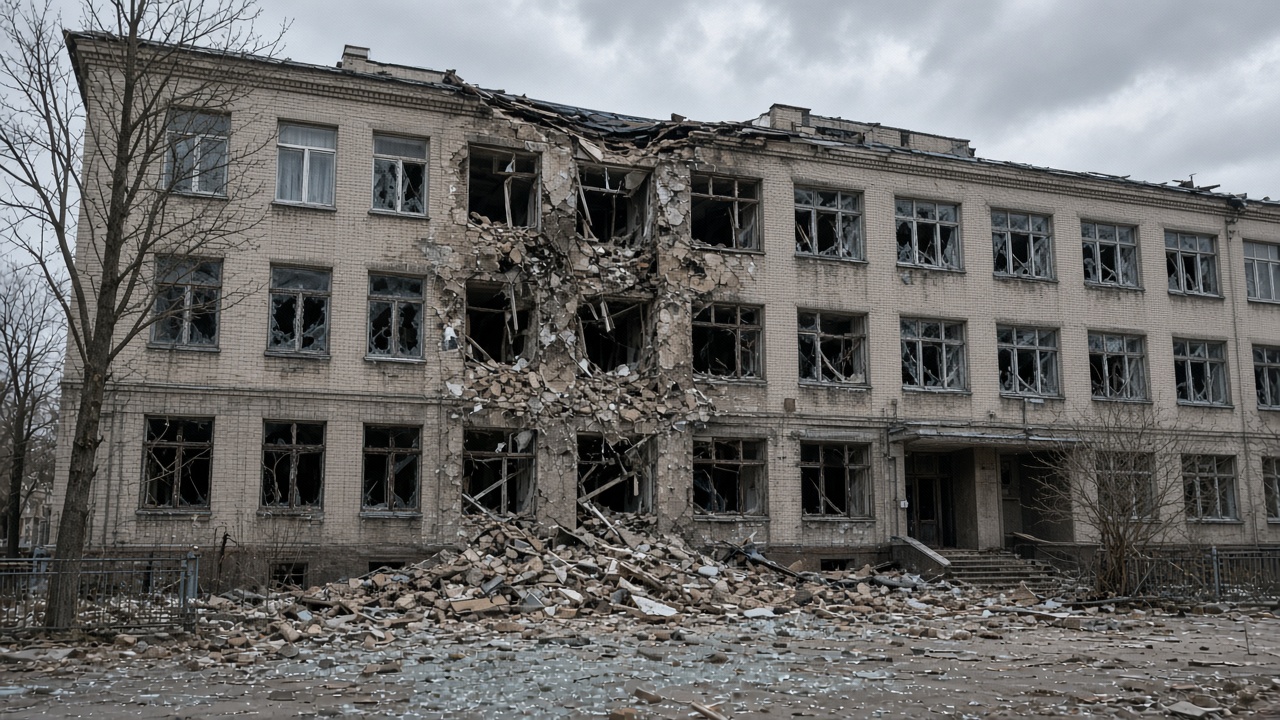
Ukraine's state nuclear safety regulator said the grounds of a nuclear research facility in Kyiv were struck on Wednesday local time, causing a fire while the experimental reactor itself remained undamaged, according to ABC News on 2 October. Separately, a school building was hit Thursday morning during a drone assault that kept air-raid alerts near constant in the capital.
Images and municipal reports described broken windows and structural damage at the school, a civilian target under international humanitarian law scrutiny when military advantage is absent. Russia's defence ministry said it was targeting energy infrastructure, a claim Ukrainian officials reject when schools and research campuses sit in the damage zone.
The sequencing matters for readers tracking winter preparedness across Ukraine's largest city. A research site hit on Wednesday and a school on Thursday show the same air campaign can swing between symbolic science targets and everyday civilian buildings within hours.
Jet drones and the air-defence problem
Ukrainian air force data cited in the reporting show drone attack volumes rising: 3,177 drone attacks through 29 September compared with 2,850 in August. A growing share includes jet-powered unmanned vehicles that fly faster than propeller drones and hug terrain, which makes them harder for Patriot and Soviet-era systems to intercept before impact.
Adviser Sergey Flash Beskrestnov told ABC that the jet drone model seen in Kyiv is designed to cut electricity pylons and bridge steel, not only to explode in open streets. That design choice aligns with Russia's stated goal of degrading Ukraine's power grid before cold weather, even when the visible headline is a school facade.
Near-constant alerts exhaust civilians and spread rescue teams thin. Klitschko reported damage to a support section of the Southern Bridge, a transport link residents rely on even when the main span stays open with restrictions.
Winter energy strategy
Last winter Russia focused on substations and generation plants. Beskrestnov's warning points to high-voltage transmission lines and bridge supports as the next layer because knocking out pylons can deny power to wide regions without hitting every plant again. Ukraine has reinforced some lines and imported more air-defence missiles, but coverage is not uniform around Kyiv oblast.
Repair crews learned to work in body armour and under curfew last year. Targeting bridge steel adds mobility costs: detours for commuters, slower aid convoys, and harder schedules for workers trying to keep hospitals powered when grids flicker. Moscow's energy narrative and Kyiv's civilian damage reports will stay in tension all season.
Zelenskyy's office has used strikes on scientific sites before to argue for faster Western air-defence deliveries. The undamaged test reactor at the research facility is technically good news; the fire on the grounds is still a safety and morale hit.
Not the same beat as the Academy of Sciences story
AMU previously covered a strike on Kyiv Academy of Sciences facilities in an separate incident thread. The 2 October ABC beat is the school plus the nuclear research facility grounds plus bridge damage and the jet-drone winter prep narrative. Conflating the two dates or locations blurs accountability for readers trying to follow accountability and aid planning.
Russia's statement on energy targeting does not list the school by name. Ukrainian prosecutors opened investigations into the school strike as a potential war crime, a standard Kyiv response that may take years to reach courts.
Where things stand
As of 2 October 2026, Kyiv absorbed drone and missile pressure on a research campus with no reactor breach, on a school with visible damage, and on bridge infrastructure Klitschko said was harmed. Jet-powered drones are driving up attack counts and stressing interceptors. Ukrainian advisers expect transmission towers and bridge steel to dominate Russia's winter playbook.
An undamaged test reactor is not a green light for complacency. Fires on research grounds and broken classroom windows still shrink normal life in the capital. Parents posting shelter photos from school basements travel faster than official communiques, which keeps pressure on Kyiv to show intercept successes even when debris still lands.
Until air-defence coverage catches up with jet drones, alerts will stay frequent and energy repair crews will work under fire. Each calm morning is measured against whether the next wave targets pylons, bridges, or another school classroom roof.
Sources: ABC News on Kyiv school and nuclear research facility strikes; ABC News on jet drones and winter energy targeting warnings.