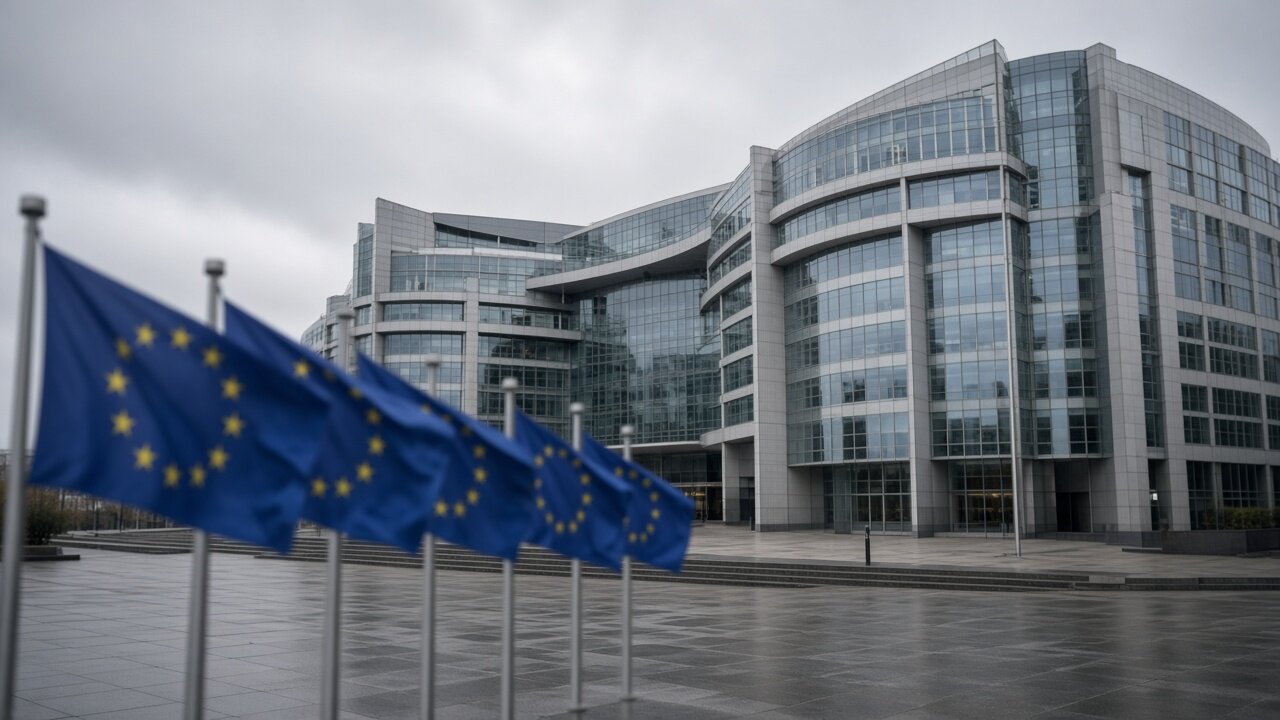
The EU is already paying instalments on a €90 billion loan meant to keep Ukraine afloat through the end of 2027. Enlargement commissioner Marta Kos told donors in Brussels that reforms build trust. A string of corruption scandals has tightened scrutiny. Allies are also being pressed to help plug the gap, while plans to tap frozen Russian central bank assets remain stuck on Belgian opposition.
TL;DR: Brussels will unlock more than €20 billion still available this year only if Ukraine delivers agreed reforms. Kyiv still needs about $20 billion after finding $7 billion in domestic savings from a $27 billion deficit. Speeding up the €90 billion loan risks emptying it before end-2027. Frozen Russian assets and extra Allied cash are discussed, not settled.
Status note: Checked 30 September 2026 against Straits Times / AFP. Funding timing, reform conditions and any use of frozen Russian assets can still change.
What Brussels said, and what Kyiv wants
At a donors gathering in Brussels with Kyiv, Kos put the EU line in plain words: "Our message to our Ukrainian friends is clear: deliver the agreed reforms, so we can continue supporting you financially." She added: "Reforms matter. They build trust. They give Ukraine's partners confidence that our support is being used effectively."
That is not a cutoff threat in the sense of walking away from Ukraine. It is a gate. Money already allocated for 2026 stays conditional on reform delivery. Ukraine's government, fighting a war and running a wartime budget, is asking for speed: faster instalments on the big EU loan so the state can cover salaries, services and defence-linked spending through a hard winter.
EU officials say they are looking at options for Ukraine's funding needs. They also say Kyiv has not fully explained how the shortfall numbers were built. Until that gap in the spreadsheet is clearer, Brussels wants reform progress on funds already offered for this year.
The €90 billion loan and the €20 billion still waiting
Brussels is paying the €90 billion loan in instalments. The design is meant to stretch support to the end of 2027, not to empty the envelope in one winter. That is why a request to bring payments forward creates a second problem even if it solves the first: the fund could run dry sooner than planned.
Separately, a letter to Ukraine's parliamentary speaker this month said "over 20 billion euros in EU financial assistance remains available" before the end of 2026 if reforms are carried out. That pool is the near-term unlock button. It is not a brand-new spending promise invented this week. It is money already framed as available, held behind reform conditions.
For an average reader, the mechanism is simple. There is a long loan on a drip feed through 2027. There is a large pot still available this year if reforms move. Kyiv wants the drip turned up. Brussels wants proof the reforms and the books justify turning it up.
How Kyiv gets to a $20 billion gap
Prime Minister Serhiy Koretsky told local media over the weekend that the deficit was $27 billion. He said Kyiv would find $7 billion from domestic savings. That arithmetic leaves about $20 billion still uncovered for this year.
Those are Kyiv's figures. EU officials say the shortfall explanation is incomplete. That disagreement matters because every rushed payment and every Allied ask will be judged against whether the hole is real, measured and linked to reforms partners can see.
Corruption scandals in Ukraine have raised the political cost of writing blank cheques. Diplomats in Brussels say scrutiny is sharper. They also say willingness to keep the country funded through winter remains firm. Trust and cash are being negotiated in the same room.
Options on the table, and the ones still blocked
One EU option is to bring forward more payments under the €90 billion loan. That could close part of this year's hole. It could also leave less cushion for 2027 if the war and the budget stress continue. Allies who want predictability for Kyiv also want predictability for their own multi-year commitments.
Several EU countries have revived calls to tap frozen Russian central bank assets. The bulk of those assets sit in Belgium. Belgium remains firmly opposed, and there has been no real progress. Online claims that Europe has already seized and spent those reserves for Ukraine overstate what is settled. The debate is alive. The Belgian block is still the political wall.
The EU is also pressing Britain, Canada and Japan to help plug the financing gap. Kos told the donor meeting that the coming months will require action from everyone, that Ukraine needs predictability to keep the state functioning, and that "We are delivering our share." The ask to non-EU allies is part of that share-the-load pitch.
Why reforms are the gate after the scandals
Reform language can sound bureaucratic until it is tied to trust. After high-profile corruption cases, EU capitals need a story they can sell at home: money lands when rules move. Kos's donor-meeting quotes were written for that audience as much as for Kyiv.
Ukraine's path toward deeper EU ties already depends on rule-of-law and anti-corruption steps. The funding gate is the same politics with a wartime clock. Deliver the agreed package, unlock the assistance still available this year. Miss the reforms, and the billions stay on the table instead of in the budget.
None of that settles how large the true 2026 hole is, or whether Allied cash and any future asset plan will fill it. It does settle the EU public message of 29 September: reforms first for funds already offered; hurry-up loan draws are possible but costly for the 2027 runway; frozen Russian assets remain contested.
Where things stand
As of 30 September 2026, Brussels has told Kyiv to deliver agreed reforms to unlock more than €20 billion in EU assistance still available before year-end. Ukraine still projects a roughly $20 billion external gap after $7 billion in planned domestic savings from a $27 billion deficit. The €90 billion loan continues in instalments toward end-2027. Speeding it up is an option with a dryness risk. Tapping frozen Russian central bank assets is revived talk, not a Belgian-approved plan. Extra help from Britain, Canada and Japan is being sought, not booked.
A reform demand is not a walk-away from Ukraine. A $20 billion ask is not the same as a fully validated EU ledger. Both the trust argument and the cash argument are live, and winter will test which one moves first.