TL;DR: From 1 October, China's revised defence mobilisation law is live. After a mobilisation decision, local governments can tap civilian assets if reserves fall short. Groups and people must accept lawful levies, with vouchers, return, and compensation rules. Analysts say the net is wider. That is legal readiness, not proof of an imminent Taiwan attack.
Status note: Checked 30 September 2026 against Nikkei Asia reporting on the law's 1 October start and Taiwan-related analysis, with Institute for the Study of War September coverage on the revision's broader invoke language. The statute takes effect on the stated date. No public mobilisation order under the new text is required for this piece. Timing relative to any Taiwan scenario remains speculative beyond the legal change itself.
How Beijing got here
China has long run defence mobilisation rules that sit beside the People's Liberation Army, the People's Armed Police, and the militia. The older framework already assumed that civilian society could be pulled into a war effort. The August revision, now entering force, updates that machinery for a denser civilian tech and logistics base: factories, fleets, warehouses, computing, and transport that dual-use planners care about.
Civil-military fusion is the policy label for blurring lines between commercial capacity and national defence needs. The revised law is one legal expression of that approach. It does not invent the idea. It hardens how civilian resources can be claimed after a mobilisation decision when stockpiles and reserves are judged insufficient.
What takes effect on 1 October
The revised National Defense Mobilisation Law is in force from 1 October 2026. Passage came from the NPC Standing Committee on 28 August, with Xi's promulgation completing the formal path. From the effective date, the new levy and requisition rules are available to governments once the political decision to mobilise has been taken and reserves are not enough.
That "after mobilisation is decided" gate matters. The law is not a standing licence for random seizures in peacetime marketing terms. It is a crisis statute that turns on when higher authority decides mobilisation is on. Once that switch flips and reserves fall short, county-level and higher governments may act on civilian stock.
Nikkei Asia, writing as the start date neared, framed the change as enhancing Beijing's ability to take control of civilian infrastructure for all-out war while the leadership keeps Taiwan unification as a strategic aim. That is an assessment of capability and intent direction, not a claim that tanks are already loading.
How levy and requisition work
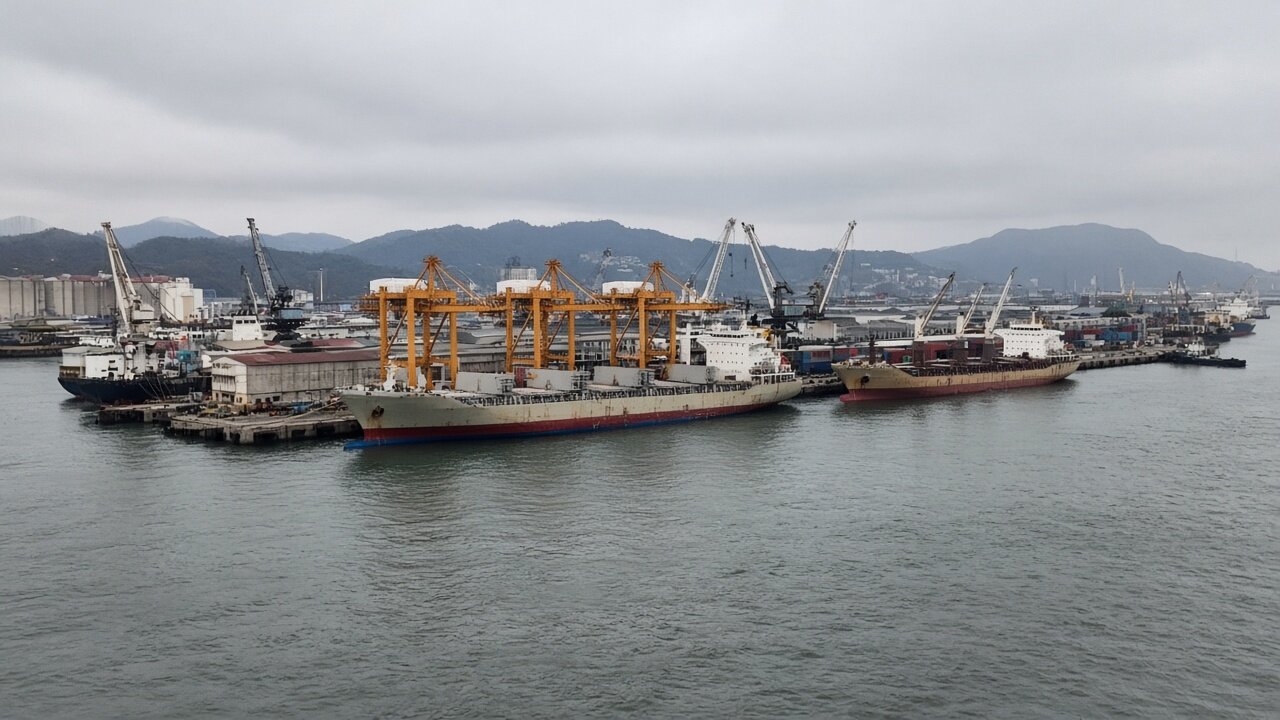
If mobilisation is decided and reserves are insufficient, governments at county level and above may levy or requisition civilian resources. The reported scope covers facilities, equipment, transport, premises, and other resources. In plain terms: buildings, vehicles, gear, and capacity that sit in private or non-military hands can be pulled into the effort under the statute's conditions.
Organisations and individuals have a duty to accept a lawful levy. Requests from the PLA, the People's Armed Police, or the militia are supposed to run through government channels rather than as freelanced seizures. Registration and vouchers create a paper trail. Return and compensation rules apply after use. Exemptions are written for essential household needs and care facilities, so the statute itself draws a line around some personal and care settings.
Those process details are the mechanism serious readers need. A headline that says "China can seize civilian stuff" is directionally true under mobilisation conditions. The fuller story is: decision first, reserve shortfall, government-channelled request, voucher, later return or pay, with named exemptions. That is still a powerful state tool. It is also a defined administrative path, not a rumour of street-level free-for-all.
Why Taiwan watchers care
Analysts at the Institute for the Study of War and related September assessments describe the revision as broadening the cases in which mobilisation can be invoked, including language around a "direct threat" to sovereignty, unity, or territorial integrity. That wording can cover more than a classic declared war. It also fits a politics in which Taiwan and related sovereignty claims sit at the centre of Party messaging.
For a Taiwan contingency, the civilian pieces that matter include sealift, drones, AI-related commercial capacity, and other dual-use logistics. A law that makes it easier to claim those assets after mobilisation is relevant to planners on all sides. Nikkei's late-September framing ties the statute to preparing civilian infrastructure control for a full conflict while Beijing keeps unification on the strategic horizon.
Relevance is not the same as a countdown clock. Legal readiness can sit on the books for years. Invasion timing depends on politics, military readiness, US and allied posture, and decisions that are not published in a mobilisation statute. Treating the 1 October effective date as proof that an attack is imminent overreads the legal fact into a schedule the public sources do not give.
Where things stand
On 1 October 2026 the revised defence mobilisation law is live. After a mobilisation decision, if reserves are insufficient, county-level and higher governments may levy or requisition civilian facilities, equipment, transport, premises, and other resources. Lawful orders carry a duty to comply, routed through government for PLA, PAP, and militia needs, with registration, vouchers, return or compensation, and exemptions for essential household and care facilities.
Analysts read the revision as a wider invoke net and a stronger civil-military fusion tool, including for a Taiwan-related crisis. Nikkei links it to Beijing's ability to commandeer civilian infrastructure in an all-out war setting while unification remains a stated strategic goal. What is settled is the statute's entry into force and the mechanism it describes. What is not settled is any claim that the start date equals an imminent invasion order. Capability and legal scope expanded. A war timetable did not arrive with the gazette.
Sources: Nikkei Asia on China's mobilisation law and Taiwan-related readiness; Institute for the Study of War September 2026 update substance on the revised National Defense Mobilisation Law's broader invoke language and civil-military fusion.