TL;DR: In a note reported by Reuters on 5 October 2026, Morgan Stanley argued that Nvidia and Broadcom have visibility into GPU and networking placement, geographic expansion, and customer coordination that helps them weather power bottlenecks. Last month the bank estimated a 34 percent net power shortfall through 2028, about 32 gigawatts after counting behind-the-meter generation and fuel cells. It does not see bottlenecks putting Nvidia or Broadcom 2027 forecasts at risk. If capacity cannot be powered and deployed, customers could still push out or cancel orders further down the chain. That is a risk map, not a company earnings revision.
Status note: Checked 6 October 2026 against Reuters coverage of 5 October 2026 republished via Yahoo Finance. Analyst estimates can change with new utility data, hyperscaler build schedules, and company filings. Nothing below is Nvidia or Broadcom official guidance.
Why power now sits next to chips
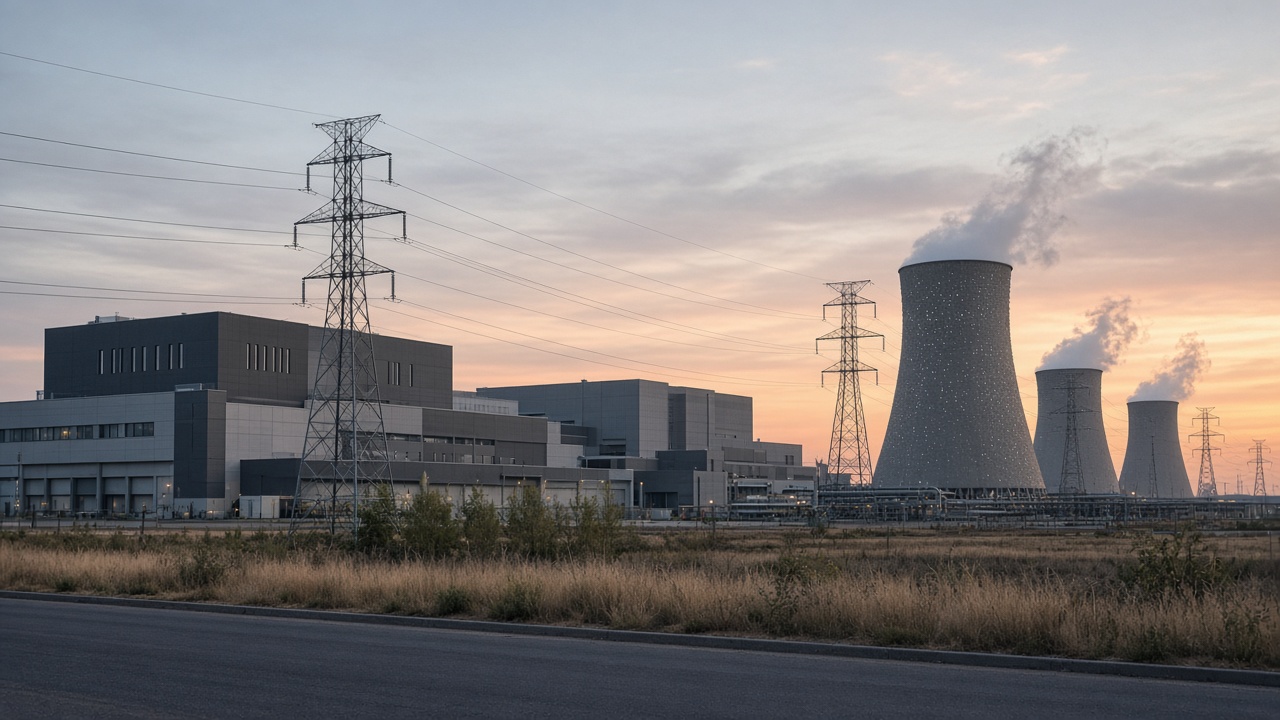
Training and serving large AI models needs dense racks of accelerators, fast networking, and steady electricity. U.S. data-center buildouts have been running into interconnection queues, transformer shortages, and local grid limits. When power arrives late, a finished chip order can sit waiting for a hall that is not ready to switch on.
That is the crunch Morgan Stanley is mapping. It is not a claim that Nvidia stopped shipping GPUs tomorrow. It is a claim that the bottleneck is shifting from "can you buy the chip" toward "can you energise the building that will use it."
The 34 percent shortfall estimate
Last month Morgan Stanley estimated a 34 percent net power shortfall through 2028. After behind-the-meter generation and fuel cells, the bank put the gap at roughly 32 gigawatts. Behind-the-meter means generation sited with the data center rather than waiting only on the utility grid. Fuel cells are one of the stopgap power options hyperscalers have been testing to fill gaps.
Those figures are bank research, not a Department of Energy official forecast. They still set the stakes: if nearly a third of planned AI power stays missing into 2028 even after on-site workarounds, some projects slip. When projects slip, the question is whose revenue slips with them.
Why Nvidia and Broadcom look better shielded
Reuters summarised Morgan Stanley's view that Nvidia and Broadcom are relatively insulated. The logic is visibility and coordination. Nvidia sits at the center of GPU allocation conversations with major cloud and AI customers. Broadcom is deep in custom networking and silicon that those same deployments need. Both firms, in the bank's framing, can see where capacity is being placed, how customers are expanding across geographies, and how to sequence shipments against power readiness.
Morgan Stanley said it does not see the power bottlenecks putting Nvidia or Broadcom 2027 forecasts at risk. That sentence is the limit clause markets will abuse if they skip it. The bank is defending its own outlook on those two names against a power scare, not guaranteeing that every AI-adjacent stock is safe.
Who feels delayed deployments first
If racks cannot be powered on schedule, customers can push out or cancel orders. Morgan Stanley pointed that risk toward memory makers, optical component suppliers, power-management chip firms, and analog producers that fill out the board around the headline accelerators. Those parts often ship into the same build wave. When the wave slips, the secondary bill of materials can take the first volume hit even while GPU leaders keep preferred allocation.
That is classic supply-chain asymmetry. The scarce, high-visibility chip can stay booked. The supporting parts tied to a specific hall's go-live date can get deferred. Readers should not collapse that into "AI demand is fake." Demand can stay real while timing risk concentrates in the middle of the stack.
Where things stand
As of early October 2026, Morgan Stanley's published view is that a serious U.S. data-center power shortfall is a live constraint through 2028, that Nvidia and Broadcom look relatively shielded on 2027 forecasts, and that memory, optical, power-management, and analog names carry more delay risk if deployments stall. The bank's 34 percent / about 32 GW shortfall estimate remains a research figure, not a government tally.
Social posts that treat the note as Nvidia or Broadcom cutting guidance, or as proof the AI buildout is over, overshoot the text. This is an analyst risk map about who absorbs power-driven slip. Watch hyperscaler capex commentary, utility interconnection timelines, and the next round of semiconductor guidance for whether that map hardens or softens.
Sources: Yahoo Finance / Reuters, 5 October 2026.