TL;DR: Deloitte's Fall 2026 economic outlook, led by chief economist Dawn Desjardins and posted 29 September with press coverage 30 September and early October, now sees 2026 GDP at 0.9%, up 0.2 percentage points from the summer 0.7% call, and 2027 at 1.6%, down 0.4 points from 2.0%. Second-quarter growth ran at a 3.3% annualized pace and a revised first quarter removed a technical recession scare at the start of the year. The forecast includes Section 338 tariffs from 22 August and Canada's reciprocal tariffs from 8 September but excludes the 15 September Section 338 expansion and U.S. import bans from 29 September on alcohol, motorcycles, molasses, and whey as additional downside. Export growth is expected to weaken sharply late 2026 and reach only 0.3% in 2027 while investment still grows 3.5% that year.
Status note: Checked 5 October 2026 against Deloitte Canada's outlook page, CBC and Financial Post coverage, and public Bank of Canada context on tariffs. Deloitte may revise again; actual GDP prints come from Statistics Canada; the BoC sets rates on its own schedule.
What Deloitte changed and what it left out
Deloitte Canada's fall outlook is the kind of document boardrooms and provinces use for planning, not the official national accounts. Dawn Desjardins and her team lifted the 2026 growth call to 0.9% from 0.7% while cutting 2027 to 1.6% from 2.0%. CBC and the Financial Post both noted that 2027 markdown as roughly a 20% reduction in the predicted growth rate, which is how journalists translate a 0.4 percentage point move for readers who think in headlines.
The important fine print is what the spreadsheet already punishes versus what it still treats as future shock. The forecast includes U.S. Section 338 tariffs effective 22 August and Canada's reciprocal tariffs from 8 September. It does not fold in the later Section 338 expansion from 15 September or the U.S. import bans that took effect 29 September covering alcohol, motorcycles, molasses, and whey. AMU already covered those bans going live; Deloitte's 1.6% 2027 figure is therefore not the worst case if those measures bite harder than the model assumes.
Why 2026 looks less awful than feared
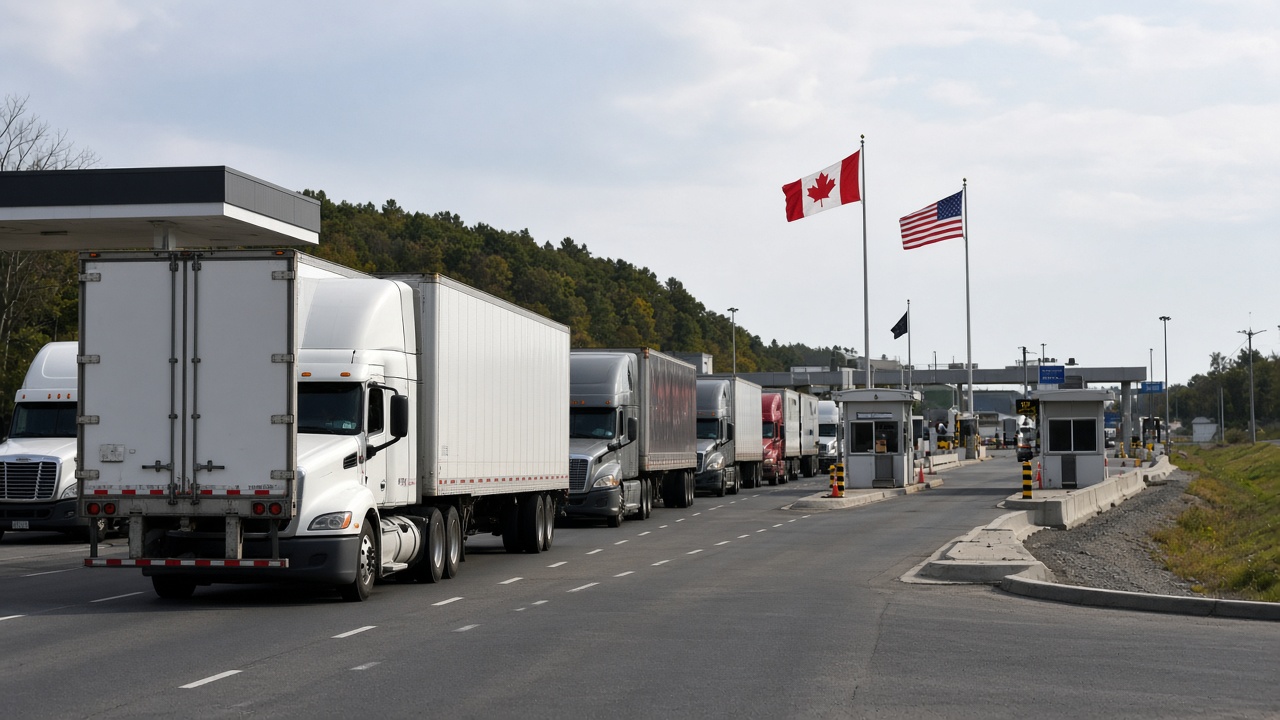
The U.S.-Canada trade fight landed in waves: steel and aluminum rhetoric in spring, Section 338 tools in August, reciprocal lists in September, then product-specific U.S. bans on familiar consumer goods. Each wave hit different provinces and sectors, which is why a single GDP point estimate never told the whole story.
Statistics Canada's second quarter printed at a 3.3% annualized growth pace, stronger than many doom loops predicted during the tariff spring. Revisions also walked back a first-quarter contraction enough that Canada did not start the year inside a technical recession definition. Deloitte's slightly higher 2026 number reflects that realized momentum even as the firm warns the export engine falters later.
Exports are the bruise. Deloitte expects a sharp weakening through late 2026 and export growth of just 0.3% in 2027. That is the tariff story showing up in trade volumes rather than in a single quarter's GDP spike. Investment, by contrast, is still modeled to grow 3.5% in 2027, suggesting businesses may keep spending on capacity even while goods crossing the border slow. That split matters for factory towns tied to U.S. orders versus regions riding domestic infrastructure and energy projects.
Bank of Canada context in one breath
Bank of Canada Governor Tiff Macklem has described tariffs as steep but on a narrow base of goods, a line Deloitte's narrative rhymes with even though this outlook is not the BoC's own forecast. Some banks, including RBC in commentary AMU has seen, treat a hold through 2026 as a base case, while UBS economists still cluster around an October rate hike call AMU covered separately. None of that is decided by Deloitte's PDF; it just sets the growth path those rate debates assume.
Where things stand
Deloitte cut Canada's 2027 growth to 1.6% because trade headwinds outweigh the second-quarter surprise, and the model already eats several tariff rounds but not the latest U.S. product bans. Readers should not confuse a consultancy outlook with an official GDP release or a central bank dot plot. If the September bans and any further Section 338 moves hurt exports more than Deloitte's excluded downside, 1.6% may still be optimistic.
Sources: Deloitte Canada Fall 2026 economic outlook; CBC on Deloitte's Canada forecast, September-October 2026; Financial Post on slower 2027 activity.