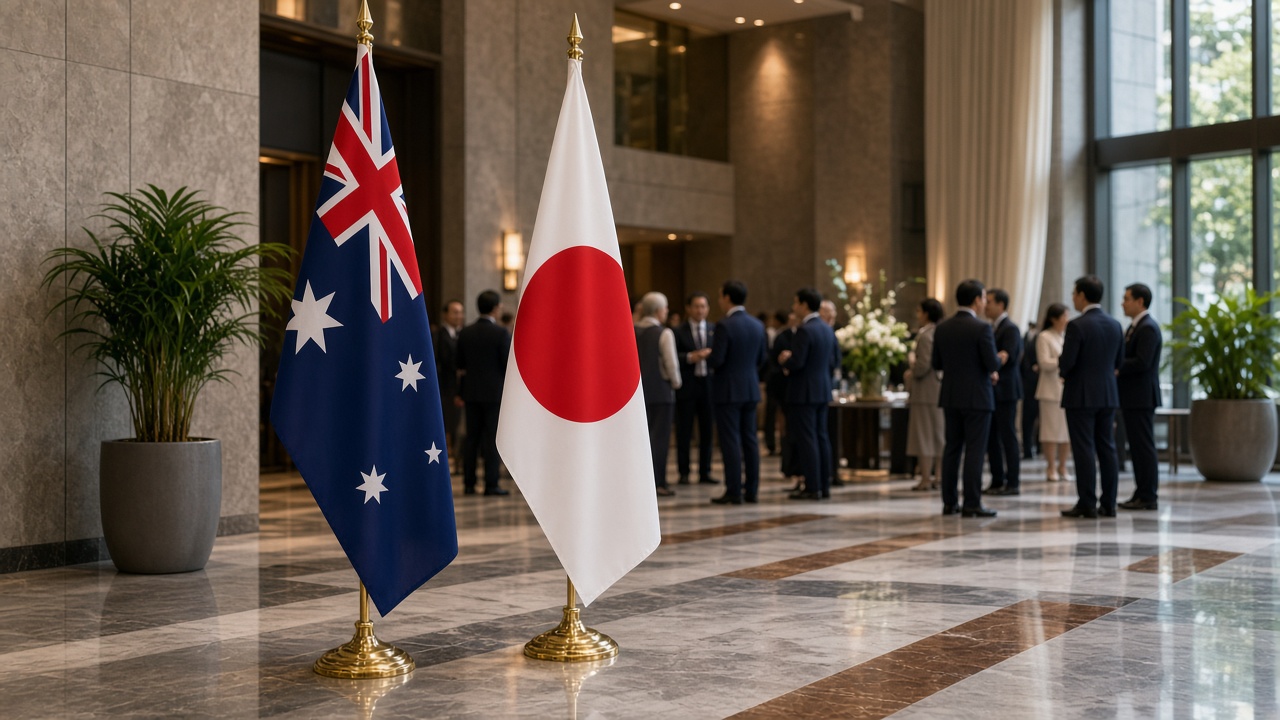
TL;DR: Foreign Minister Penny Wong's 2 October release said the inaugural Australia-Japan Leadership Dialogue runs the week of 5 October under the theme Opportunities for a Resilient Future, covering regional, economic, and energy security. Prime Ministers Anthony Albanese and Shigeru Takaichi announced it at their annual leaders' meeting in May. DFAT and Japan's foreign ministry co-host. Japan chair Michiaki Hirose is a Tokyo Gas senior corporate adviser and heads the Japan-Australia Business Co-operation Committee. Australia chair Stephen Smith is a former foreign and defence minister. Participants listed include DFAT Secretary Jan Adams, Ambassador to Japan Andrew Shearer, ANU economist Shiro Armstrong, incoming Japan-Australia Business Co-operation Committee president Debra Hazelton, Export Finance Australia chair, Grant Wilson of Tivan, Ben Wyatt as Rio Tinto and Woodside non-executive director, Main Sequence partner Phil Morle, and others named on the release.
Status note: Checked 5 October 2026 against the Australian Department of Foreign Affairs and Trade media release of 2 October 2026. Participant titles reflect the release; corporate roles can change after publication. This is Track 1.5-style conversation, not a treaty signing.
What actually launches this week
Wong's office framed the dialogue as the first of its kind at leadership level between Australia and Japan. The meeting week starting 5 October gathers ministers' alumni, senior officials, academics, and business heads under one banner: Opportunities for a Resilient Future. That phrase covers traditional security scares, supply chains, and energy transitions without promising a single communique that alters alliance law.
Co-hosts are DFAT and Japan's Ministry of Foreign Affairs. That pairing signals government ownership even when most names on the guest list wear corporate or think-tank hats. Hirose's dual role at Tokyo Gas and the Japan-Australia Business Co-operation Committee shows Tokyo wants energy and investment lanes discussed beside submarine cables and regional strategy. Smith's former defence and foreign portfolios give Canberra a chair who speaks both languages.
Who is in the room
The release names a deliberately mixed cast. Adams and Shearer anchor the Australian official side. Armstrong brings ANU economic research. Hazelton, incoming president of the business co-operation committee, links to Export Finance Australia through her chair role there. Wilson represents Tivan; Wyatt sits on Rio Tinto and Woodside boards as a non-executive director; Morle comes from Main Sequence, a venture firm tied to Australia's science agency story. The headcount is not the point. The design is: officials set guardrails, business tests what resilience means in contracts and capital, academics stress-test assumptions.
How this fits the wider relationship
Albanese and Takaichi flagged this dialogue in May at their annual leaders' meeting, so this week is delivery on a scheduled promise, not a surprise entente. Australia and Japan have been deepening security ties for years through reciprocal access agreements, joint exercises, and shared anxiety about North Korea and maritime pressure in the Indo-Pacific. Debates over US reliability in the region are live in both capitals. None of that turns this week's hotel conference into AUKUS version two or a NATO-style pledge to fight for each other.
Readers hunting a treaty will not find one here. They will find senior people building habits of conversation before the next crisis in Taiwan Strait shipping, LNG contracts, or submarine supply chains. That matters for policy watchers even if it does not change what a destroyer captain can order tomorrow.
Where things stand
The inaugural Australia-Japan Leadership Dialogue is a structured talk shop on regional, economic, and energy security. It is co-hosted by governments and co-chaired by business veterans with official pedigree. It is not a mutual defence pact and not a replacement for existing US-aligned groupings. Watch whether its communiques later spawn concrete finance or defence procurement steps. Until then, treat the event as relationship maintenance with a resilience label, which is still worth reporting in a week of Hormuz closures and European factory threats.
Sources: Australian DFAT media release on the inaugural dialogue, 2 October 2026.